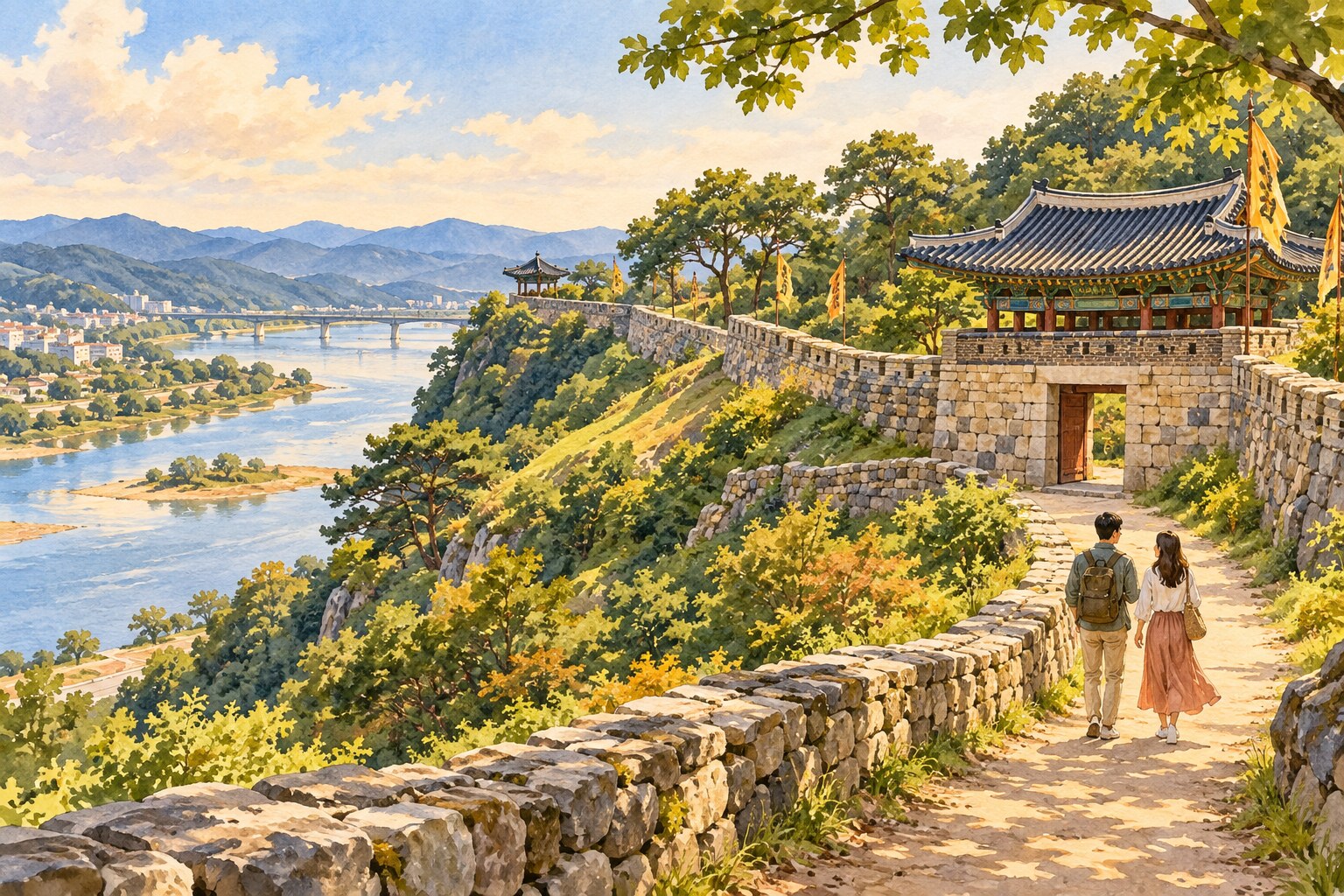
This Gongju travel guide is for visitors who want Korean history to become a place they can walk through. A riverside fortress, royal burial grounds, and a museum make Gongju an engaging destination for a focused day of discovery.
Gongju was the capital of Baekje from 475 to 538. Rather than trying to memorize an entire dynasty before arriving, use a simple question to organize your visit: how did a royal capital connect its river, defenses, and ceremonial spaces?
Who should put Gongju on their itinerary?
We recommend it to travelers who enjoy archaeology, museum collections, and walking between historical viewpoints. It is especially rewarding if your trip so far has concentrated on Seoul’s palaces and you want to explore a different period of Korean history.
A full day allows a useful introduction. An overnight stay gives you more flexibility for a slower fortress walk and a longer museum visit. Neither version requires turning every historical site in the region into a compulsory stop.
Walk a manageable section of Gongsanseong Fortress
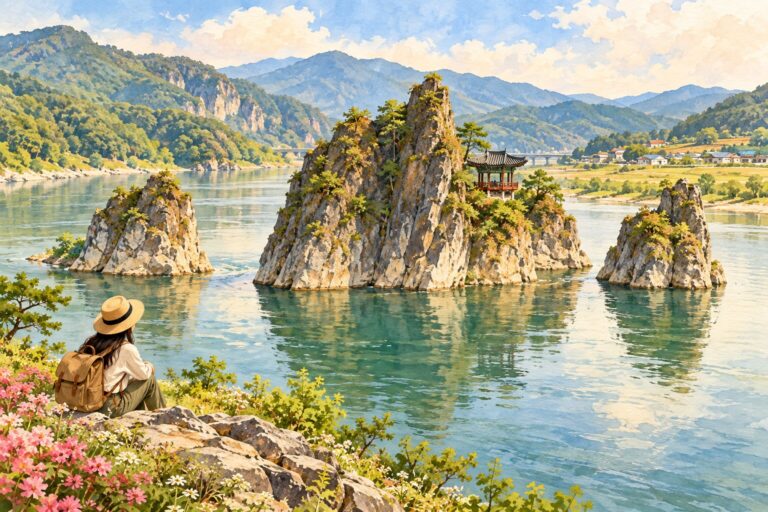
Gongsanseong occupies a strategic position above the Geumgang River. Its paths offer views of the river and modern Gongju, helping visitors understand why this landscape mattered to a capital city. The fortress is part of the Baekje Historic Areas UNESCO World Heritage property.
The site also reflects later periods of use, so do not assume every wall or building you see survives unchanged from the Baekje era. Read the signs for each structure rather than treating the whole complex as one moment in history.
Start by checking the route map and choosing a section suited to your energy. Hilltop paths and stone surfaces can require more effort than a flat city stroll. Comfortable shoes matter, and shortening the route is sensible in rain, heat, or slippery conditions.
Visit the royal tomb landscape
The Tomb of King Muryeong and Royal Tombs area introduces Baekje’s royal burial heritage. The rounded burial mounds offer a very different visual experience from a palace: much of what makes the place important needs explanation rather than a dramatic building facade.
Use the site’s interpretation to connect the landscape with the people buried there. Follow the visitor route and check which exhibition spaces are open. A ticket to an archaeological site should not be taken to mean that you can enter an original burial chamber.
Use Gongju National Museum to connect the details
Gongju National Museum displays archaeological material from the region. It is a valuable companion to the outdoor sites because objects and labels can provide context that is difficult to grasp from walls or mounds alone.
Our suggestion is to choose a small number of objects and read their labels carefully. Ask what each object reveals about craftsmanship, daily life, status, or connections beyond the kingdom. You will often remember those questions more clearly than a long list of dates.
The museum can also be the first stop of your day. If the morning is wet, begin indoors and decide later whether the fortress paths suit the conditions.
A flexible one-day itinerary
- Morning: Gongsanseong and a selected fortress route, allowing time to stop at the river views.
- Lunch: a meal in town, with a genuine rest before the next visit.
- Afternoon: the royal tomb area and Gongju National Museum, trimming one visit if your arrival was late.
This is a suggested sequence, not a timed tour. Map the transfers and each venue’s last admission before using it. If you only have half a day, choose the fortress and one indoor or archaeological stop instead of attempting all three.
Compare the whole journey, not just the train ride
When choosing transport, enter your final sightseeing destination as well as Gongju’s arrival station or bus terminal. Compare the onward transfer before booking: a place name on a ticket does not guarantee that it is beside the old city sights.
Save these search terms in a Korean map app: 공산성 for Gongsanseong, 무령왕릉과 왕릉원 for the royal tombs, and 국립공주박물관 for the museum. Confirm the return journey first if you are visiting without a car.
Check the calendar before going
Holiday closures matter here. Published visitor information lists Chuseok Day and Seollal Day closures at key sites, while the museum also has a regular weekly closing pattern. Check each operator’s notice for your actual date, particularly around public holidays.
Gongju is most rewarding when you connect a few places thoughtfully. A fortress view followed by a well-chosen museum display can tell you more than a hurried circuit of every available attraction.
Official information and sources
- KTO: Gongsanseong Fortress
- KTO: King Muryeong and Royal Tombs
- KTO: Gongju National Museum
- Gongju National Museum: official information
Researched September 24, 2026. Suggested itineraries are editorial recommendations, not live transport schedules. Check current opening, ticket, and access notices before travel. Featured image: original AI-generated interpretive illustration; not a photograph or an exact site reconstruction.