Korean Film “Hero”
If you want to be deeply moved today, choose this film: “Hero”. [영웅]
A revered mother once told her son, sentenced to death after an unjust trial, to face death with dignity. Her name was Maria Cho.
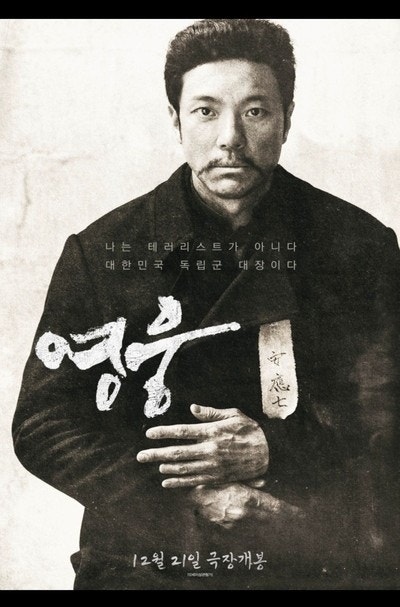
Hero is a musical film adapted from a stage production about An Jung-geun, one of Korea’s most beloved and respected independence activists. Yet behind this national hero stood a mother whose courage may have been even greater.
On October 26, 1909, An shot Itō Hirobumi at Harbin Station in China. Itō was Japan’s first resident-general of Korea and a central figure in expanding Japanese imperial control over the country.
An insisted that his action was not a personal murder but an act of war in Korea’s struggle for independence. The Japanese court, however, tried him as a common criminal rather than a prisoner of war. On February 14, 1910, he was sentenced to death.
In the film, Maria Cho sends a final letter to her condemned son. The following words have long circulated in books and popular media as “Maria Cho’s last letter”:
My son, my beloved son Thomas,
If you believe that dying before your old mother would make you an unfilial son, then I would become an object of ridicule. Your death is not yours alone. You carry the outrage of the entire Korean people.
If you appeal, you will only be begging the Japanese Empire for your life. Since you have come this far for your country, do not change your mind. Accept death.
You are being punished for doing what you believed was right. Do not cowardly beg for life. To die for a just cause is the greatest act of devotion you can show your mother.
This will probably be the last letter I send you. I am sending your burial clothes. Wear them when you go.
I do not expect to meet you again in this life. In the next world, may you return as a good son of our Heavenly Father.
This should not, however, be presented as a verified handwritten letter. No original copy has been found, and recent historical research suggests that many of its famous lines were composed or added decades later. Contemporary records preserve several messages delivered through An’s brothers and attorney, but not this letter itself.
A devout Catholic, Maria Cho never visited her son before his execution. We do not know whether she feared that seeing him would weaken his resolve or whether she simply could not bear to look at the face of the son she was about to lose.
The film portrays her sending him burial clothes. On screen, those white garments do not feel like a mother pushing her son toward death. They feel like one final embrace sent to a child she can no longer save.
Maria Cho was more than the mother of a great man. She was an independence activist herself. She donated her jewelry to a national movement resisting Japanese domination. After her son’s death, she continued supporting independence activists and the Korean Provisional Government in the Russian Far East and Shanghai.
Yet she did not ignore the moral conflict between fighting for freedom and taking a human life. She loved her country without romanticizing every act of violence. She loved her son without relieving him of the weight of his choice.
That is what makes her story more painful—and more moving—than a simple tale of heroism.
If you want to laugh, cry, and carry the emotions of a Korean film with you long after it ends, choose Hero.