A container of homemade kimchi can carry more than food. Someone has washed the vegetables, prepared the seasoning, and set a portion aside for you. Kimjang culture reveals the work and relationships behind a dish visitors often encounter as a small side at a restaurant. Understanding it means looking beyond the recipe to the people who prepare and share it.
Preparing for winter, together
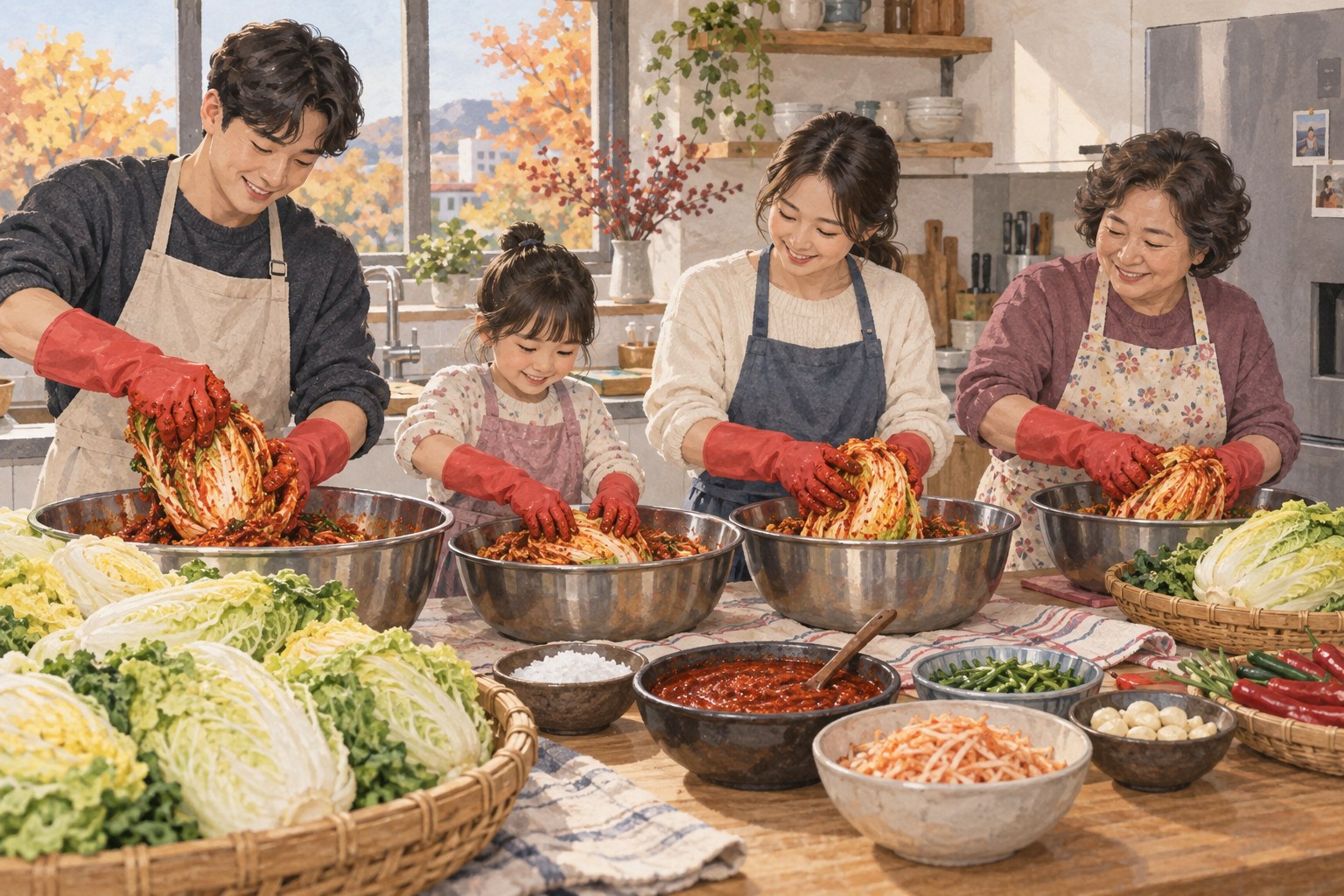
Kimjang is the preparation of a substantial supply of kimchi for the colder months. It developed as a practical way to preserve vegetables for a season when fresh produce was harder to obtain. Salting and rinsing cabbages, cutting radishes, mixing seasoning, packing containers, and cleaning up all take time. Sharing these tasks makes a large batch more manageable. Kimjang is traditionally associated with late autumn and the approach of winter, but there is no single national kimjang day. Weather, location, and household schedules affect the timing.
The flavor of a particular home
Korean households do not all follow one recipe. Seasonings, seafood ingredients, heat levels, and preferred stages of fermentation vary. Some knowledge is easier to demonstrate than to write down: how a properly salted leaf feels, or how much seasoning to spread between the leaves. Working beside an experienced relative can be a way to learn these details. A familiar flavor may bring back memories of a particular person or kitchen. Asking how a family makes its kimchi usually opens a better conversation than ranking one recipe as the most authentic.
Why the finished kimchi travels to other homes
Relatives or neighbors may help each other and divide the finished kimchi. A portion may also go to someone who could not join the preparation. It is a useful gift that can become part of everyday meals. There is no universal rule requiring an equally expensive gift in return. Thanking the maker, telling them you enjoyed it, and returning a borrowed container are thoughtful responses. If you are unsure whether the container was included as a gift, simply ask.
Remembering the work behind the celebration
Kimjang can be a cheerful gathering, but making a large quantity of food is demanding. Shopping, carrying ingredients, preparation, and cleaning all require effort. In many families, women have carried much of that responsibility. Appreciating the tradition includes noticing who is doing the work. Helping move ingredients or tidy the kitchen can be as meaningful as joining the most photogenic part. Shared enjoyment is easier to sustain when responsibilities are shared too.
If you are invited to help
Wear comfortable clothes that can get stained, and ask whether gloves and an apron will be provided. Follow your host’s food preparation and hygiene instructions. Ask permission before photographing people or a private kitchen. Mention dietary restrictions in advance: kimchi may contain fish sauce or salted shrimp, despite being made mainly from vegetables. If you receive kimchi to take home, ask how to store it. You do not need to arrive with expert skills. Taking care with an assigned task and helping clean up are valuable contributions.
Not every household holds a large kimjang gathering
Some households make small batches, buy kimchi, receive it from relatives, or combine these approaches. Space, family size, work schedules, and preferences shape those decisions. Buying kimchi does not make someone less Korean. A useful question is not whether every Korean family follows the same tradition, but how this particular household prepares and shares its food. That leaves room for both continuity and change.
Further reading: UNESCO: Making and sharing kimchi
Related reading: Doljanchi: Understanding Korea’s First Birthday Celebration