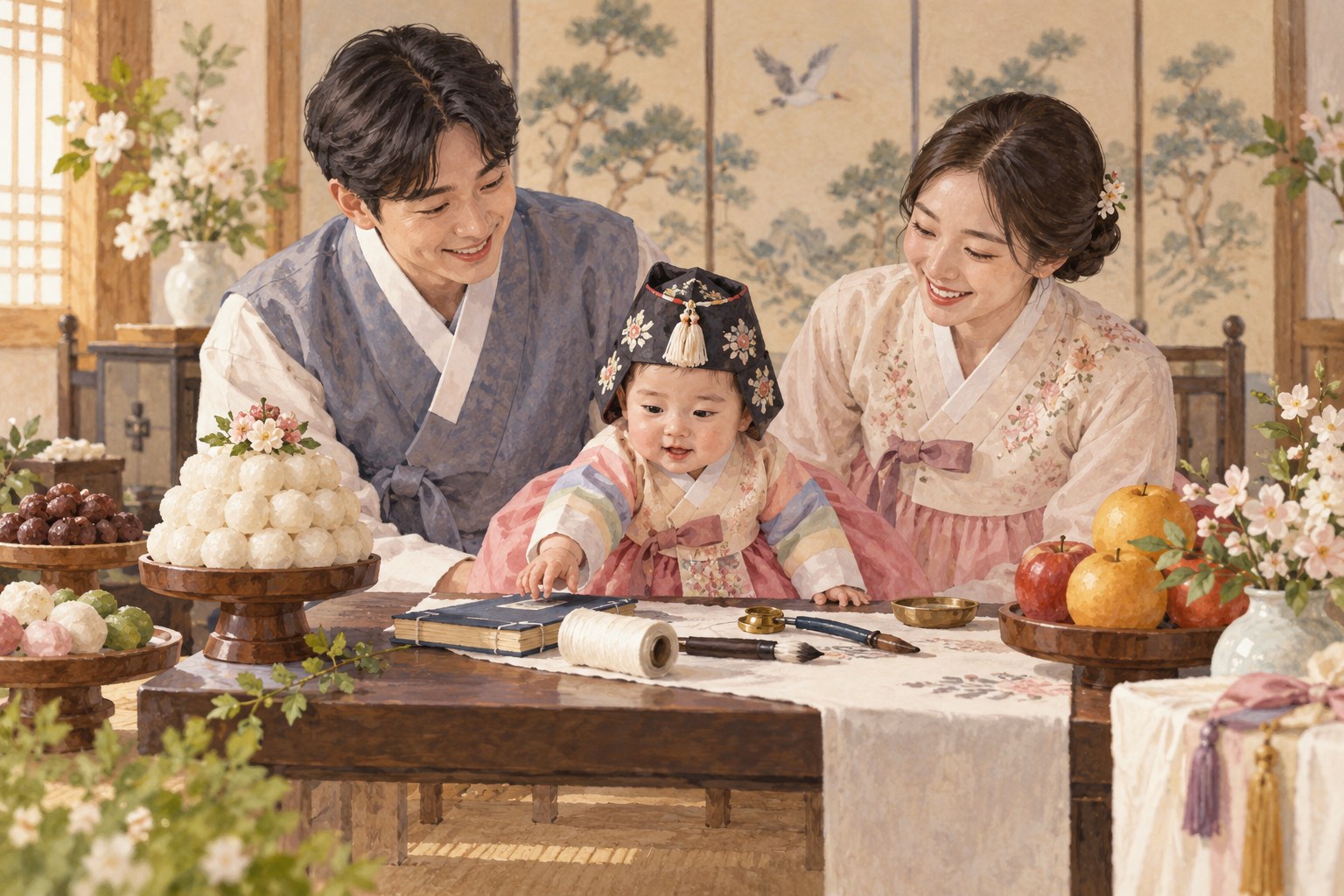
A baby sits before a book, a spool of thread, and several other objects. As a small hand reaches forward, the adults laugh and applaud. This is doljabi, a familiar part of doljanchi, Korea’s first birthday celebration. To a visitor, it may look as though the family is choosing a future career. Today, it is better understood as a playful moment within a gathering that celebrates a child’s growth and the family’s hopes.
Why the first birthday matters
A child’s first birthday marks one full year since birth. In the past, when surviving infancy was less certain, reaching that milestone brought particular relief and joy. Celebrating it expressed gratitude for the child’s growth and wishes for continued health. It also brought relatives and friends together around the people caring for the baby. Modern celebrations vary considerably. Some families hold a large reception, while others choose a small meal, a photo session, or a quiet day at home.
What the doljabi objects mean
During doljabi, objects are placed within the child’s reach and guests watch what the baby picks up. Thread is commonly associated with a long life, books or writing tools with learning, and money with prosperity. Objects and interpretations vary between families. Modern additions may include a microphone or a ball, reflecting the family’s interests and playful ideas about the future. This is not a test of the baby’s abilities or a reliable prediction of a profession. The child can ignore everything or pick several things without spoiling the occasion.
Are hanbok and an elaborate table essential?
A hanbok and a table arranged with rice cakes and fruit can give the celebration a traditional appearance. They are not requirements for a meaningful first birthday. Some families dress their child comfortably and celebrate with a simple cake. Images of elaborate events should not be treated as a standard every Korean family follows. Rather than comparing the size or cost of celebrations, notice how the parents have chosen to mark the day and whether the baby is comfortable.
Choosing a gift without guessing a required amount
Useful baby items, money, and gold gifts within some close relationships are among the possibilities. There is no single appropriate amount for every guest. Ask the parents what they need, or check with someone attending who understands the family’s preferences. For clothes, consider the season when the baby will wear them as well as the size. An exchangeable gift can be convenient if the family already owns something similar. Confirm whether you can attend and how many people are coming so the hosts can plan seating and food.
Let the baby set the pace
During doljabi, avoid blocking the child’s view or the family’s photographs. Ask before picking up or touching the baby. Crying, sleeping, or losing interest is normal in an unfamiliar, busy setting. There is no need to force a smiling photograph. Before posting a picture showing the child’s face or name online, ask the parents for permission. An invitation to a family celebration does not automatically include permission to publish images of it.
What to take away from the occasion
The object the baby chooses may inspire jokes, but the more revealing scene is the circle of people celebrating a small movement together. Behind the laughter are wishes for a healthy, happy life. If the customs are unfamiliar, ask the family how they prefer to celebrate. Warm congratulations and consideration for the child matter more than performing every detail perfectly.
Further reading: Korea.net: A first birthday celebration
Related reading: Korean Housewarming Culture: Gifts and Etiquette for Guests