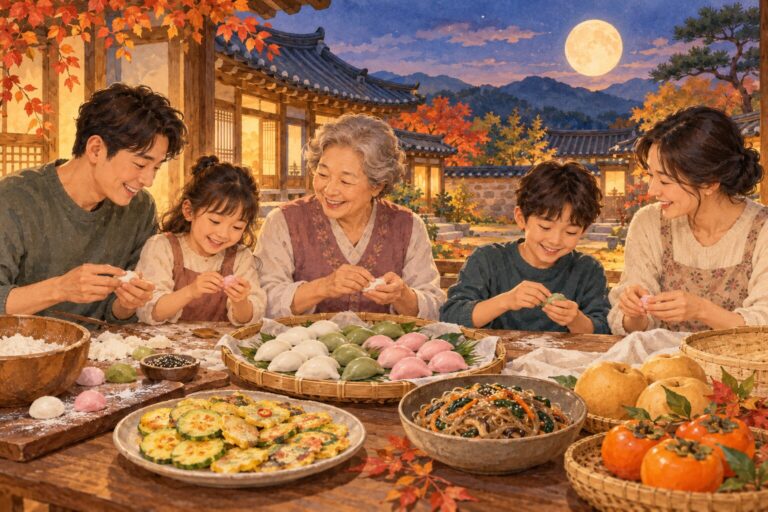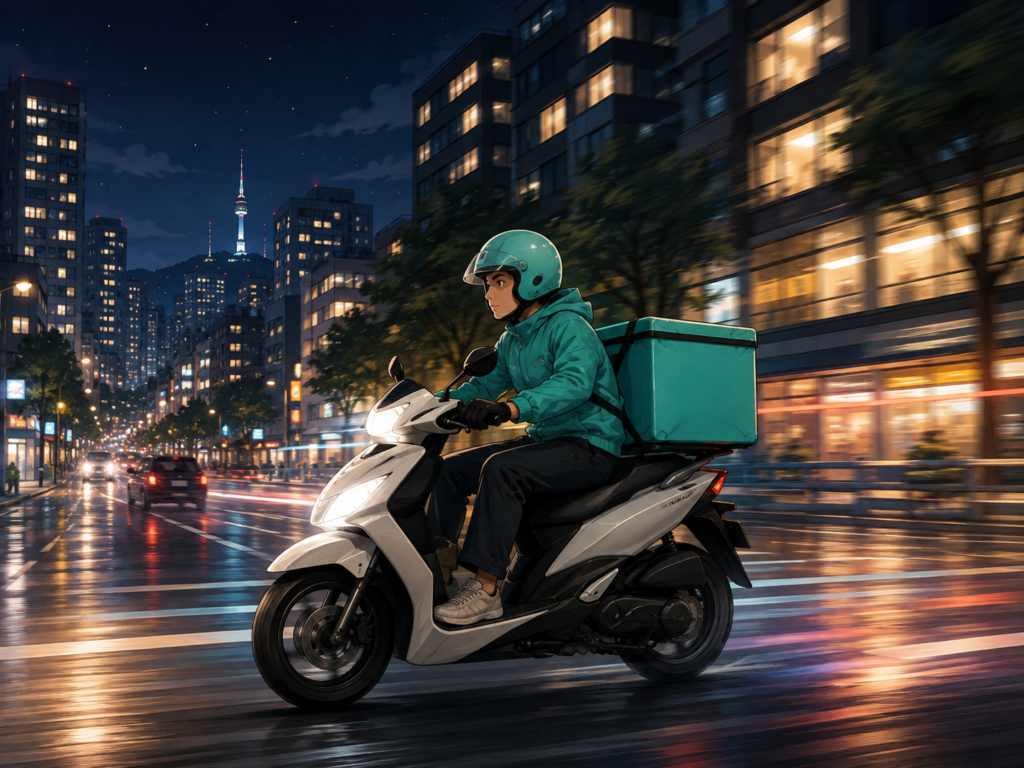
You order food in Korea.
A little while later, the doorbell rings.
You look at the clock and think:
“Already?”
For many foreigners, Korea’s delivery culture can feel almost futuristic.
And it is not limited to restaurant food.
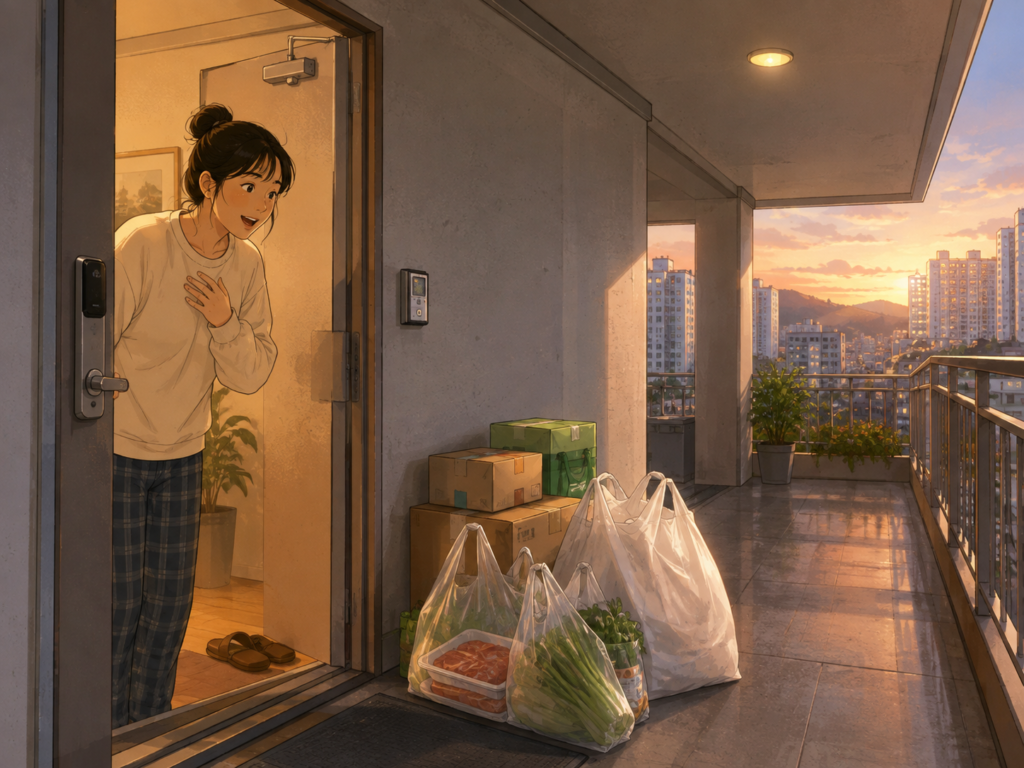
Groceries, household products, clothing, books, and many other items can arrive remarkably quickly. In some areas, people can order groceries late at night and find them outside their door early the next morning.
How did Korea become so good at delivery?
Density Makes Delivery Efficient
The first reason is simple: many Koreans live close together.
Large apartment complexes may contain hundreds or even thousands of households in a relatively small area.
For a delivery driver, that means many customers can be served without traveling long distances between each home.
Compare that with a rural area where houses may be several kilometers apart.
In a dense Korean city, one apartment complex can contain as many customers as an entire small town.
That makes fast delivery much easier and more economical.
Technology Made It Even Faster
Korea was also quick to adopt high-speed internet, smartphones, digital payments, and mobile apps.
Today, ordering food may require only a few taps on a phone.
You choose the restaurant, select the food, pay electronically, and track the delivery.
Online shopping works in much the same way.
But there is an important point that is easy to miss:
Korean delivery culture existed long before smartphones.
Before Apps, There Was Jajangmyeon
Long before food-delivery apps became common, Koreans were already ordering meals by telephone.
One of the most famous examples is jajangmyeon (자장면), Korean-style noodles in black bean sauce.
For decades, people have called Chinese restaurants and asked for jajangmyeon to be delivered to homes, offices, shops, and factories.
In the past, delivery workers sometimes carried metal containers stacked with bowls and even returned later to collect the dishes.
Food delivery was already part of everyday Korean life.
Smartphones did not invent the culture.
They simply made an old habit faster, easier, and available for almost everything.
From Dinner to Dawn Delivery
Modern delivery now goes far beyond restaurant meals.
Korean consumers can order groceries, fresh food, household supplies, and everyday products for very fast arrival.
The combination of dense cities, efficient logistics networks, digital technology, and strong consumer demand has created a system in which speed itself has become part of the service.
Once people become accustomed to fast delivery, they begin to expect it.
And companies compete to become even faster.
Convenience Has a Human Cost
Of course, there is another side to this convenience.
Fast delivery depends on people working under tight schedules, including drivers, warehouse workers, and restaurant staff.
Korea has had ongoing debates about working conditions, traffic safety, and the pressure created by extremely fast delivery expectations.
So the convenience that customers enjoy also raises questions about how fast is too fast.
“Why Go Out If It Can Come to You?”
For a foreign visitor, Korean delivery can feel like a glimpse of the future.
For many Koreans, however, it is simply normal life.
Hungry?
Order dinner.
Out of milk?
Order groceries.
Need something tomorrow morning?
There may already be a service for that.
Perhaps the best way to understand Korean delivery culture is through one very practical thought:
“If it can come to me, why do I have to go and get it?”
Before you place your first order
Fast delivery is not available everywhere or for every product. Check the service area, estimated arrival time, delivery fee, minimum order, and payment options for your particular order. Treat an arrival time as an estimate rather than a promise; weather and busy meal periods can change it.
If you are staying in a hotel or guesthouse, first ask whether deliveries are accepted and where you should collect them. Use the property’s correct Korean address and confirm the building or room details that the service requires. Do not assume a driver can enter a hotel floor or leave food at a room door.
Three words that change what happens next
배달 means delivery: the order comes to the specified location.
포장 means takeaway: you collect the food and take it with you.
택배 usually refers to parcel delivery, such as a package ordered from an online shop.
These words help when you are looking at a menu or asking a restaurant directly. 배달 돼요? asks whether delivery is available. 포장해 주세요 asks for the food to be packed to take away. Choosing takeaway by mistake can mean that your food is waiting at the restaurant.
A short conversation with your accommodation
Guest: 음식 배달 시켜도 돼요? — May I order food delivery?
Staff: 네. 로비에서 받아 주세요. — Yes. Please collect it in the lobby.
Guest: 네, 알겠습니다. — Okay, understood.
A useful delivery note is 로비에서 받을게요 — “I’ll collect it in the lobby.” Use it only after agreeing on that arrangement. Keep track of the order so the driver does not have to wait while the food gets cold.
If the app is difficult to use
Before paying, check whether the service supports your phone number, account setup, and payment method. Requirements differ by service. If you cannot complete an order, ask the restaurant about takeaway or ask your accommodation what assistance it offers. A nearby meal can be easier than spending an evening trying to register for an unfamiliar service.
Try it: You are outside a restaurant and want to carry dinner back to your room. Say 포장해 주세요. If you want the restaurant to bring it to your accommodation, first ask 배달 돼요? and confirm the address and cost.
For another meal option, explore using Korean convenience stores. You can also practice inviting someone to eat together.