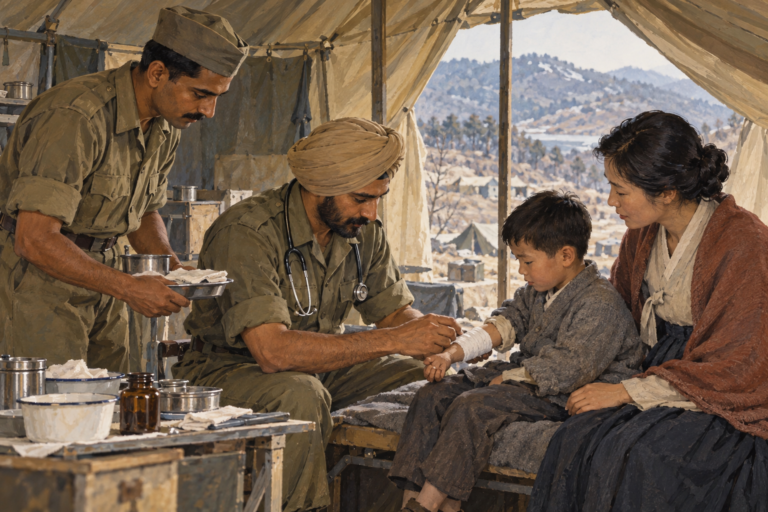
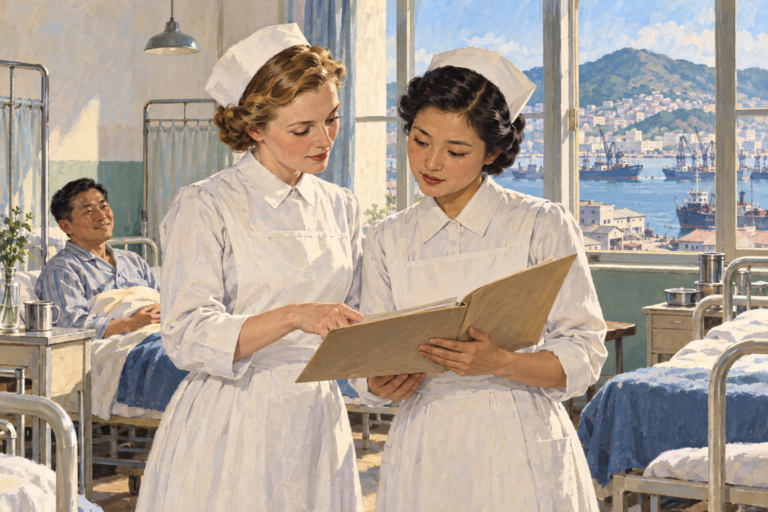
Before Korean brands became familiar in German homes, Korean workers were building lives in German mines and hospitals. Their story connects economic history with the much more personal question of where home begins.
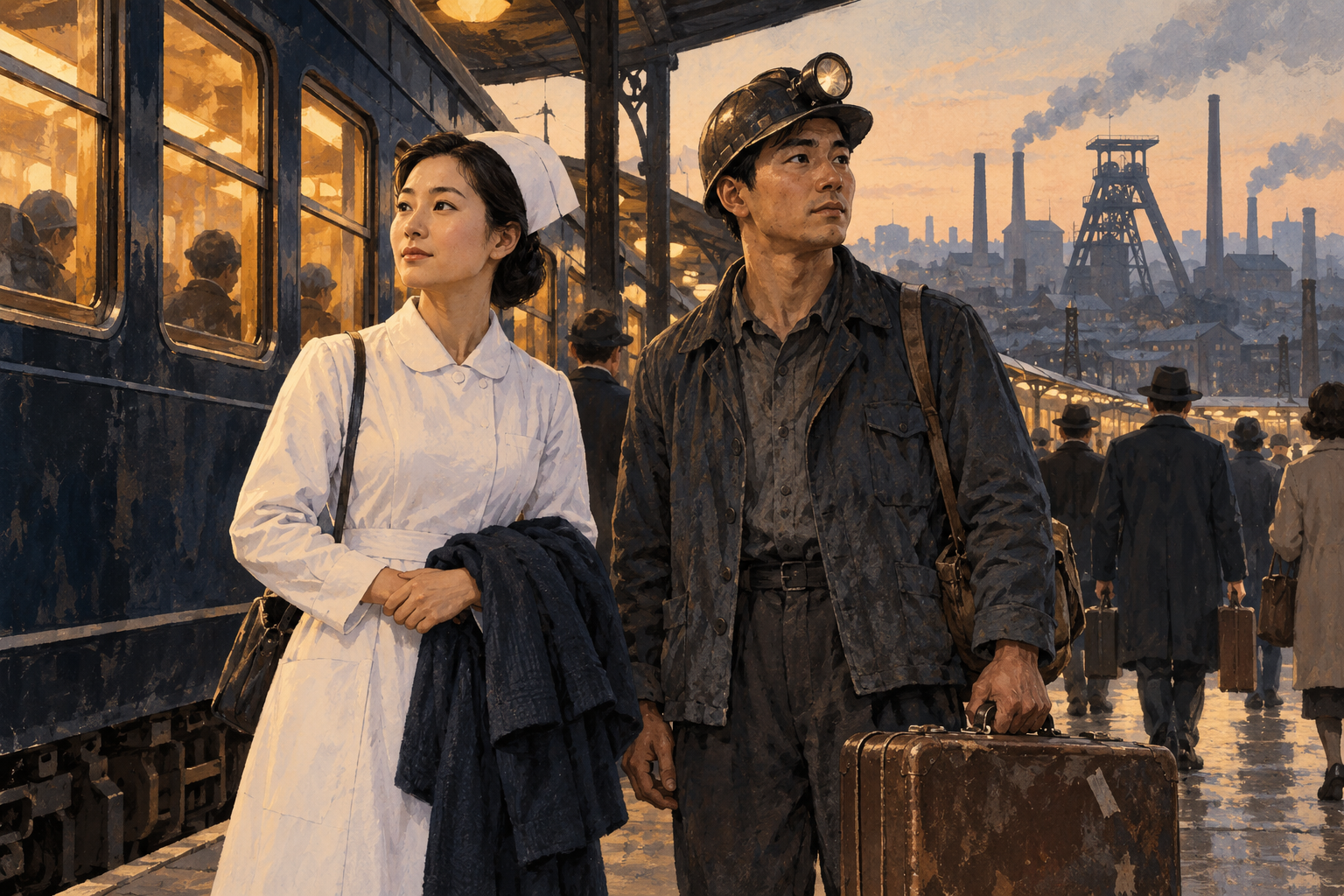
Why did Korean miners and nurses go to West Germany?
South Korea needed employment opportunities and overseas earnings during its postwar recovery. West Germany needed workers. The relationship was therefore an exchange with interests on both sides: Korean people brought labor and professional skills, while German employers offered paid work abroad. Remembering both sides helps us see the workers as participants in an international labor market, rather than simply as recipients of generosity.
A Korean embassy exhibition identifies the 1963 temporary employment agreement as an important starting point for the miners. It also marks 1966 as the beginning of nursing placements through Korea’s overseas development organization. These are milestones in organized recruitment, not a claim that no Korean nurse had reached Germany earlier. See the Korean embassy’s exhibition account.
A professional qualification did not remove the difficulties
For nurses, an overseas contract could contain a difficult mismatch. Jinyoung Yu and Jungwook Seo’s research examines how programs described as educational assistance also supplied workers to German hospitals. Many recruits already had Korean qualifications. Language preparation, the division of nursing duties and recognition of professional experience could differ from what they expected. The study also traces private recruitment before the larger government-linked arrangements. Read the 2024 study in Asia Europe Journal.
This distinction matters when we tell the story today. Learning the language of a ward is more than memorizing vocabulary: instructions, symptoms and colleagues’ expectations all have to become understandable. An account that celebrates the destination while overlooking the work can miss what made migration demanding. Nor should every nurse’s experience be compressed into a single story of either opportunity or hardship.
What sending money home meant
The Korea Tourism Organization describes the Namhae German Exhibition Hall as a place preserving the history and belongings of miners and nurses who worked abroad and sent money to their families. Its account also emphasizes separation and loneliness. The hall opened in 2014, decades after the departures it remembers. Explore the exhibition’s official visitor listing.
A remittance can appear as one line in an economic history. For a household, it is money earned by someone who is absent. That difference in scale is worth keeping in mind. National development is one way to understand these journeys; family relationships and the worker’s own ambitions are others. Gratitude becomes more meaningful when it leaves room for all three.
Were the workers’ wages collateral for German loans?
A familiar retelling links the dispatch of workers directly to German loans, sometimes saying their wages were pledged as collateral. Historians Lee Yung Go and Ok-Nam Yi challenge that account in their study, The Link That Never Was. They point to the chronology of the 1961 economic protocol, which preceded the major worker-dispatch milestones. The collateral story should therefore not be repeated as an established fact. Read the research abstract in the Korea Citation Index.
Questioning that claim does not diminish the workers’ contribution. It separates a specific financial assertion from the broader significance of employment, remittances and migration. A moving story does not need an uncertain detail to make the people in it worthy of respect.
Reading Namhae’s German Village differently
Namhae’s German Village is connected to Koreans who returned after living in Germany. The Korea Tourism Organization explains that the village was developed to welcome returning residents; its German-style architecture makes that connection immediately visible. Read the official German Village introduction.
If you visit, let the exhibition provide context for the houses. Three useful questions to take with you are: What work did people actually do? What did they leave behind? What did returning to Korea mean after years abroad? Check the official listing for current opening arrangements before planning a trip. Treat residential spaces as people’s homes, and ask before photographing residents.
A Korean connection built by ordinary working lives
Here, “K-DNA” describes cultural memory, not ancestry or an inherited national personality. The German connection invites us to remember people as workers with skills, choices and private lives. Their significance reaches beyond a patriotic success story: they help explain how relationships between countries can grow through daily work.
For another perspective on Korea’s ties with the world, read why Ethiopia helped Korea, or explore more researched stories in K-DNA.
Source note: This article brings together an embassy history, peer-reviewed research and official tourism interpretation. Linked sources distinguish documented milestones from later commemorative narratives.