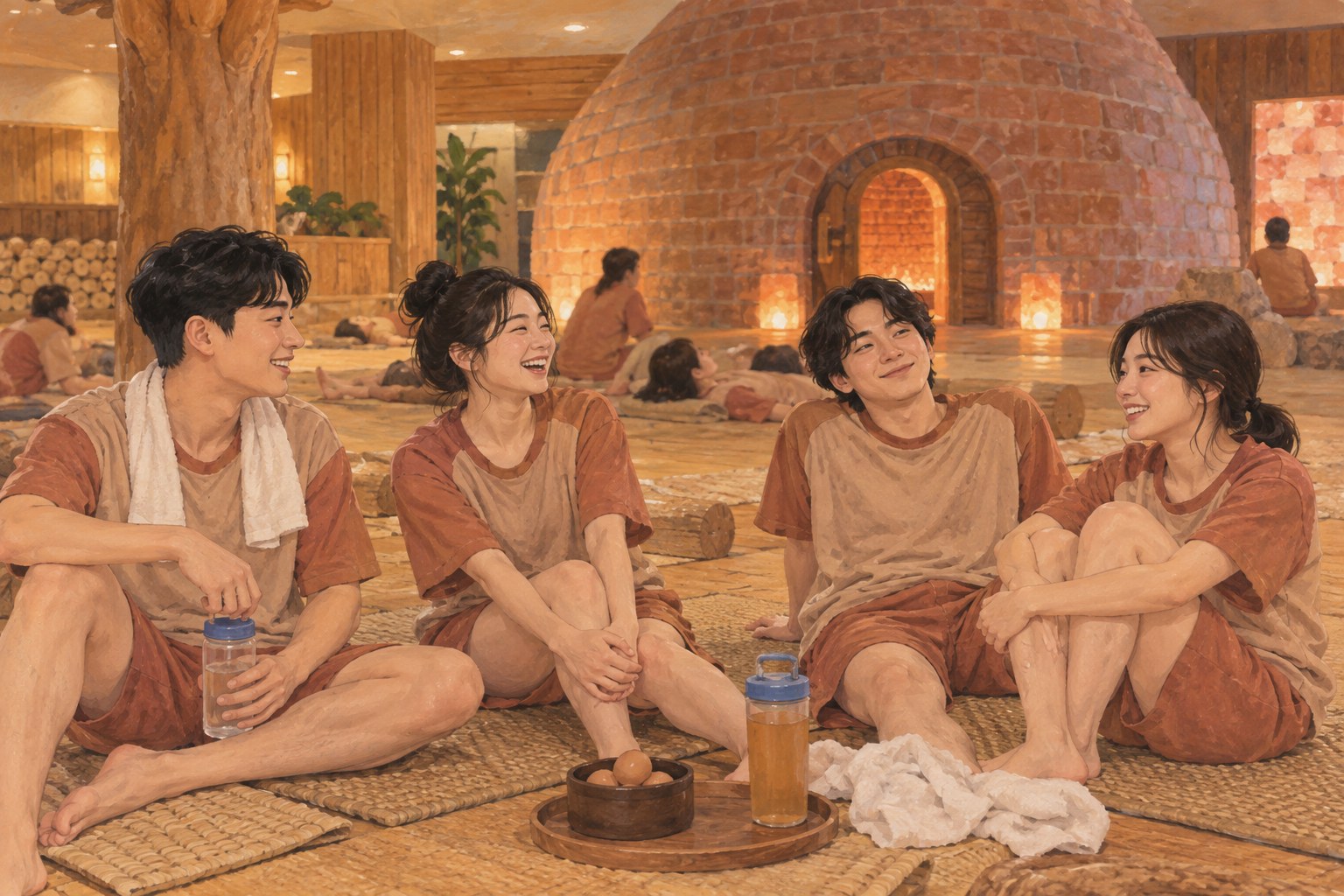
People in loose matching outfits sit on the floor, chat, or close their eyes for a while. If you have seen a jjimjilbang in a Korean drama, this may be the scene you remember. Jjimjilbang culture brings bathing, resting, eating, and spending time together into one setting. The heated rooms are only part of the experience. A television scene, however, does not show the layout or rules of every facility.
Bathing areas and shared lounges are different spaces
A traditional bathhouse centers on washing and bathing. A jjimjilbang commonly adds clothed dry-heated rooms and communal relaxation areas. Understanding the distinction helps prevent first-visit confusion. Conventional bathing areas are generally separated by gender and used without clothing, while shared relaxation areas require the designated clothing. Layouts, admission conditions, and available facilities vary. Read the signs and ask staff rather than assuming every room follows the same rules.
Spending time together without a strict schedule
A cafe centers on drinks and a restaurant on a meal. At a jjimjilbang, friends may talk, rest separately, and meet again for a snack. Sharing a space does not require everyone to do the same activity at the same moment. That flexible pace is part of the appeal. It does not mean every Korean person enjoys communal bathing or visits regularly. Some prefer private spaces, and a companion should not feel pressured to participate in something uncomfortable.
What to check before paying
Ask whether the ticket covers bathing only or also the heated and relaxation areas. Check time limits, additional charges, towel and clothing provision, and whether to bring personal toiletries. After admission, follow instructions for shoe and clothing lockers, and keep the key or wristband secure. Some facilities charge purchases to a wristband for payment at departure, but systems differ. Services such as body scrubs may cost extra. Check the specific venue’s current opening hours and overnight policy instead of assuming it stays open all night.
Etiquette that keeps shared spaces comfortable
Wash before entering a communal bath and follow the facility’s instructions for towels and other items. In lounges, keep calls and videos quiet and leave room for people to pass or rest. Avoid reserving a large area with belongings. Do not take photographs in changing or bathing areas. In other shared spaces, respect the venue’s photography rules and avoid recording people without permission. Other visitors’ privacy matters more than getting a souvenir picture.
Snacks and towel styles are optional
Sweet rice punch and baked eggs are familiar jjimjilbang associations, but not every facility sells them. If you want a snack, check the menu and designated eating areas. The rolled towel look seen in entertainment is not a required uniform or a rule of etiquette. You do not have to recreate every scene from a drama to enjoy the visit. Resting comfortably and following local instructions are enough.
The hottest room is not a challenge to win
Do not push yourself to stay in a heated room. Leave and rest if you feel uncomfortable. Your health circumstances may affect whether heat exposure is appropriate; ask a healthcare professional if you need individual guidance. A cultural visit should not be presented as a guaranteed treatment or detox. The most useful lesson from jjimjilbang culture is often simpler: enjoying a slower pace while being considerate of the people sharing the space.
Further reading: Korea Tourism Organization: Jjimjilbang visitor information
Related reading: Han River Picnic Culture: How to Enjoy Seoul at a Slower Pace