The best and worst times to visit Korea depend on what you want from your trip. A quiet walk around Seoul, a street full of cherry blossoms, and a mountain covered in autumn leaves call for different dates. Weather matters, but so do Korea’s holiday calendar and the places you plan to visit.
For a first trip built around walking and sightseeing, spring and autumn are usually the easiest choices. Seollal and Chuseok can also be surprisingly rewarding if you stay in Seoul and plan around closures. The more demanding periods are the summer rainy season, midsummer heat, and the coldest part of winter.
Good times to visit Korea
1. Seollal and Chuseok: a different, sometimes quieter Seoul
During Seollal, the Lunar New Year, and Chuseok, the autumn harvest holiday, many residents leave Seoul to visit family in their hometowns. Others use the break to travel abroad. Some office districts and neighborhood streets can feel noticeably quieter than on an ordinary working day. For visitors who dislike the city’s usual rush, that change can be part of the attraction.
This does not mean that all Koreans leave, or that every attraction becomes empty. Popular palaces, shopping areas, and holiday festivals may still draw crowds. A quiet neighborhood and a busy cultural event can exist just a few subway stops apart.
Namsangol Hanok Village in Seoul hosts holiday celebrations with traditional activities and performances. Korean Folk Village in Yongin, outside Seoul, is another place to explore seasonal customs and folk games. Check the program for your particular year: dates, admission, and activities can change. Seoul’s city-center options are particularly convenient if you want to avoid an intercity journey.
The main trade-off is travel logistics. Intercity train and express bus tickets can sell out, highways can be congested, and some restaurants, shops, and museums close for part of the holiday. Make a short list of confirmed dining options and check each attraction’s holiday notice before leaving your hotel.
Seollal usually falls in January or February, while Chuseok falls in September or October; their Gregorian dates change each year. Seollal therefore offers cultural advantages without removing winter’s cold. If comfortable outdoor weather is your priority, the two holidays are not interchangeable.
Our planning suggestion: Choose one Seoul base for the holiday and organize each day around a confirmed opening or event. Leave long-distance sightseeing for another part of the trip.
2. Cherry blossom season: late March to mid-April
Cherry blossom season is one of Korea’s most memorable travel windows. As a broad guide, look at late March to mid-April, with southern destinations generally blooming before Seoul. Jeju and Jinhae often draw visitors in late March or early April; Seoul’s well-known blossom walks commonly come into focus in early April.
These are planning windows, not guaranteed peak dates. Warm spells can bring flowers forward, while rain and wind can shorten their best display. A festival’s scheduled dates also do not guarantee full bloom on the day you arrive.
For a less crowded experience, try a weekday morning and include an ordinary neighborhood park alongside the famous viewing spots. Build a trip that you would still enjoy if the blossoms were early: a market visit, a museum, and a palace walk can give the day a second purpose.
3. Autumn foliage season: October to early November
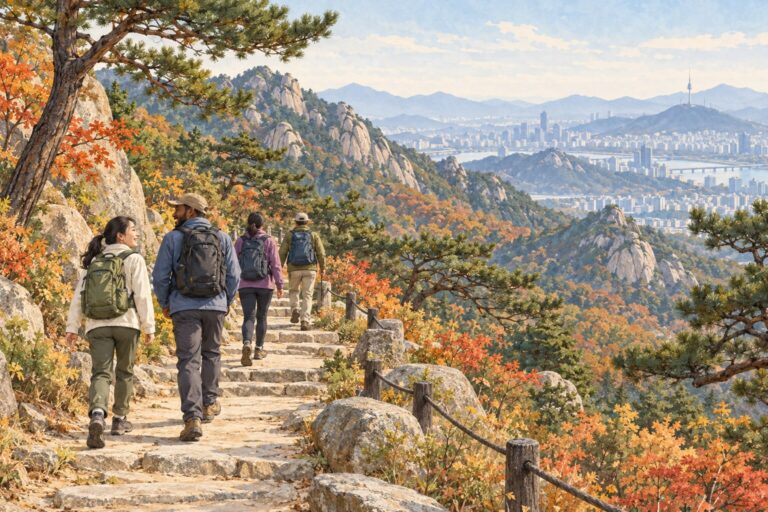
Autumn brings red maples, yellow leaves, and an excellent reason to spend time outdoors. October to early November is a useful broad window for foliage travel, although higher northern mountains change earlier than many lower or southern destinations. The best dates depend on the location and that year’s weather.
Mountain scenery is only one option. Parks and palace grounds can provide an easier outing if you do not want a full hike. For a mountain visit, distinguish the first appearance of color from peak foliage; a forecast may list both.
Our suggestion is to pick a region first, then check its foliage report closer to departure. Keep one flexible day for the best weather, and bring an extra layer for the journey home after sunset. If you plan to hike, read our guide to Korean hiking culture and check your chosen trail’s current access information.
More difficult times to visit Korea
1. The rainy season: roughly late June to late July
Korea’s summer rainy season is called jangma. The Korea Meteorological Administration’s normal starting dates are approximately June 19 for Jeju, June 23 for southern regions, and June 25 for central regions. For travel planning, late June through late July is a useful broad window, with regional and yearly variation.
It does not rain continuously every day. The challenge is that heavy downpours can interrupt a carefully planned outdoor itinerary. Wet shoes, damp luggage, and repeated changes of plan can make a walking holiday tiring.
Keep an indoor alternative near each day’s main destination, such as a museum or gallery. Check local forecasts and access notices before taking a mountain or riverside walk; do not enter a closed trail or flooded path. Rain can also occur outside the official jangma period, so its ending is not a promise of dry weather.
2. Midsummer: late July through August
If you struggle with heat and humidity, midsummer is a difficult time for long sightseeing days. Late July through August is the main period to plan cautiously around; August is Seoul’s warmest month in the 1991–2020 climate normals.
A monthly mean can understate what a sunny afternoon feels like. Seoul’s August mean is 26.1°C, but its average daily high is 30.0°C, and individual heatwave days can be hotter. Humidity and warm nights add to the discomfort.
A workable summer itinerary puts a short outdoor visit early in the day, an indoor stop around midday, and another outing later. Choose accommodation with reliable air conditioning, and avoid treating a full afternoon of exposed walking as an ordinary default. Beach trips and evening activities may suit this season better than an all-day city walk.
3. Midwinter: especially January
For visitors who dislike the cold, winter can be just as challenging as summer. January is the coldest month in Seoul’s climate normals. Treat roughly late December through early February as a winter-cold planning window, with January at its center; this is a practical guide, not a claim that the same day is coldest every year.
Seoul’s January mean is −1.9°C, with an average daily low of −5.5°C. Cold waves can bring much lower temperatures, and wind can make time outdoors feel colder still. A photograph of a sunny palace courtyard will not tell you how uncomfortable standing there for an hour might be.
Plan short outdoor visits separated by warm indoor stops. Pack layers, gloves, and shoes suited to potentially slippery surfaces. Winter can be rewarding for snow or skiing, but it requires a different itinerary from a casual spring walking trip.
What Korea’s climate normals tell us
The table below uses KMA’s 1991–2020 normals for Seoul, station 108. These are 30-year averages, not a forecast, and not nationwide temperatures. “Average high” and “average low” mean averages of daily maxima and minima, not record extremes.
| Month | Mean temperature | Average daily high | Average daily low |
|---|---|---|---|
| January | −1.9°C | 2.1°C | −5.5°C |
| February | 0.7°C | 5.1°C | −3.2°C |
| July | 25.3°C | 29.0°C | 22.3°C |
| August | 26.1°C | 30.0°C | 22.9°C |
South Korea has important regional differences. Southern coastal destinations and Jeju generally have milder winters than Seoul, while mountain areas can be considerably colder. Use these Seoul figures as a reference for a Seoul-centered trip, then check the forecast for every region you will visit.
Which dates should you choose?
- For flowers: start with late March to mid-April, then match your destination to current bloom reports.
- For autumn scenery: start with October to early November and check regional foliage timing.
- For a quieter side of Seoul and holiday culture: consider Seollal or Chuseok, with confirmed openings and limited intercity travel.
- If weather discomfort would spoil your trip: think carefully before choosing the rainy season, late July–August, or January.
The best date is the one that supports the kind of day you want to have. Decide how much walking, flexibility, and temperature discomfort you are comfortable with before booking the calendar’s most photogenic season.
Sources and planning resources
Climate figures checked against the KMA publication below, Seoul monthly normals, printed page II-27 (PDF page 95). Seasonal windows are general guidance; holiday programs and annual flower forecasts should be rechecked for your travel year.
- KMA: Climatological Normals of Korea, 1991–2020 (PDF)
- KMA: June climate report, including normal jangma starting dates
- VISITKOREA: Climate and seasonal travel guidance
- VISITKOREA: Seollal holiday travel guide (2026 example)
- VISITKOREA: Chuseok holiday travel guide (2026 example)
- VISITKOREA: Spring bloom destinations
- VISITKOREA: Fall foliage destinations
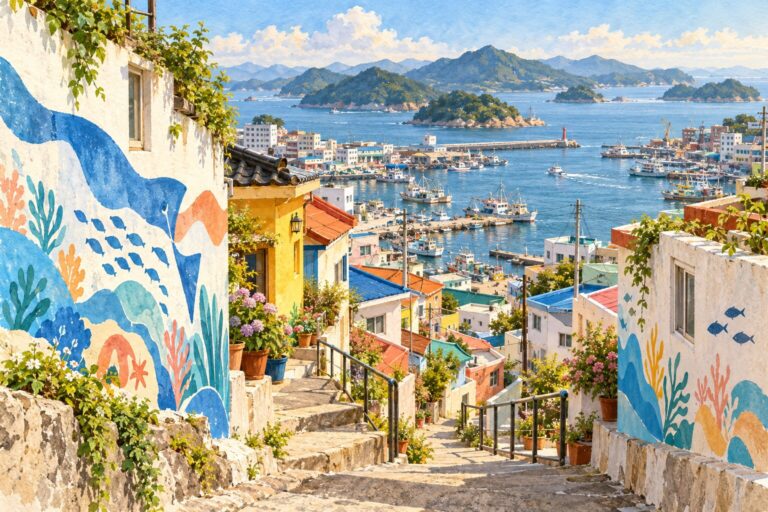
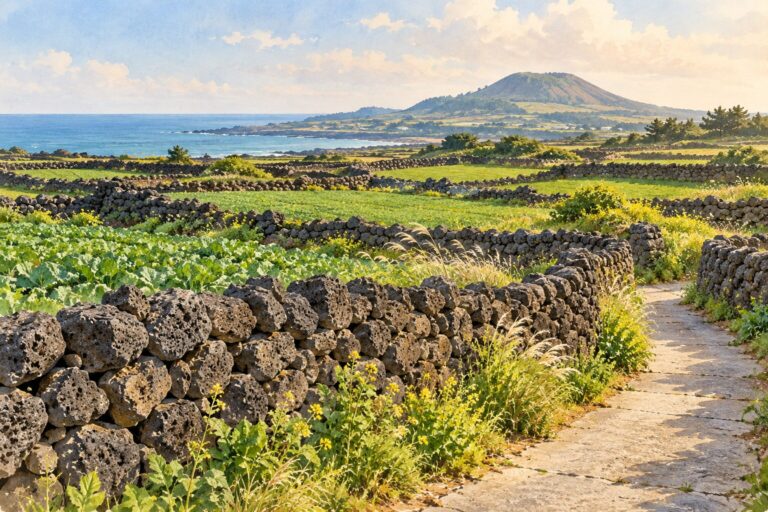
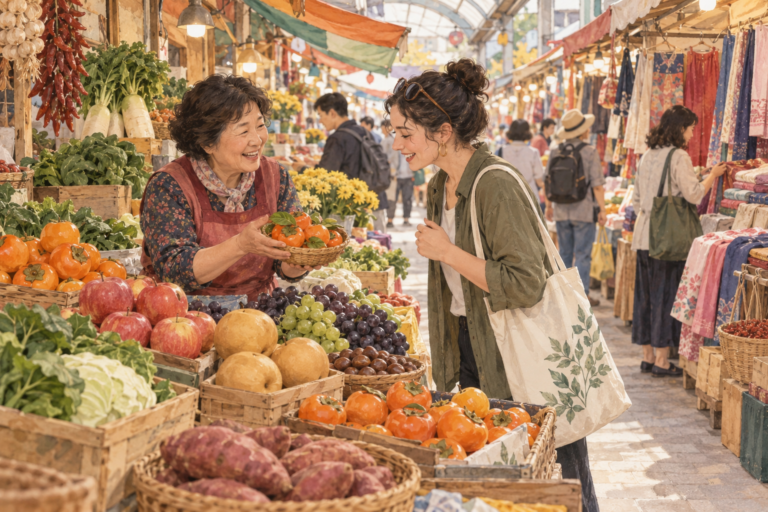
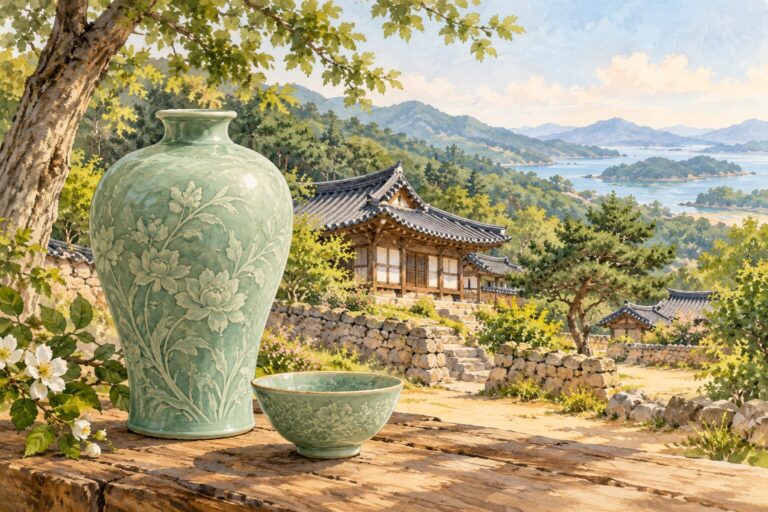
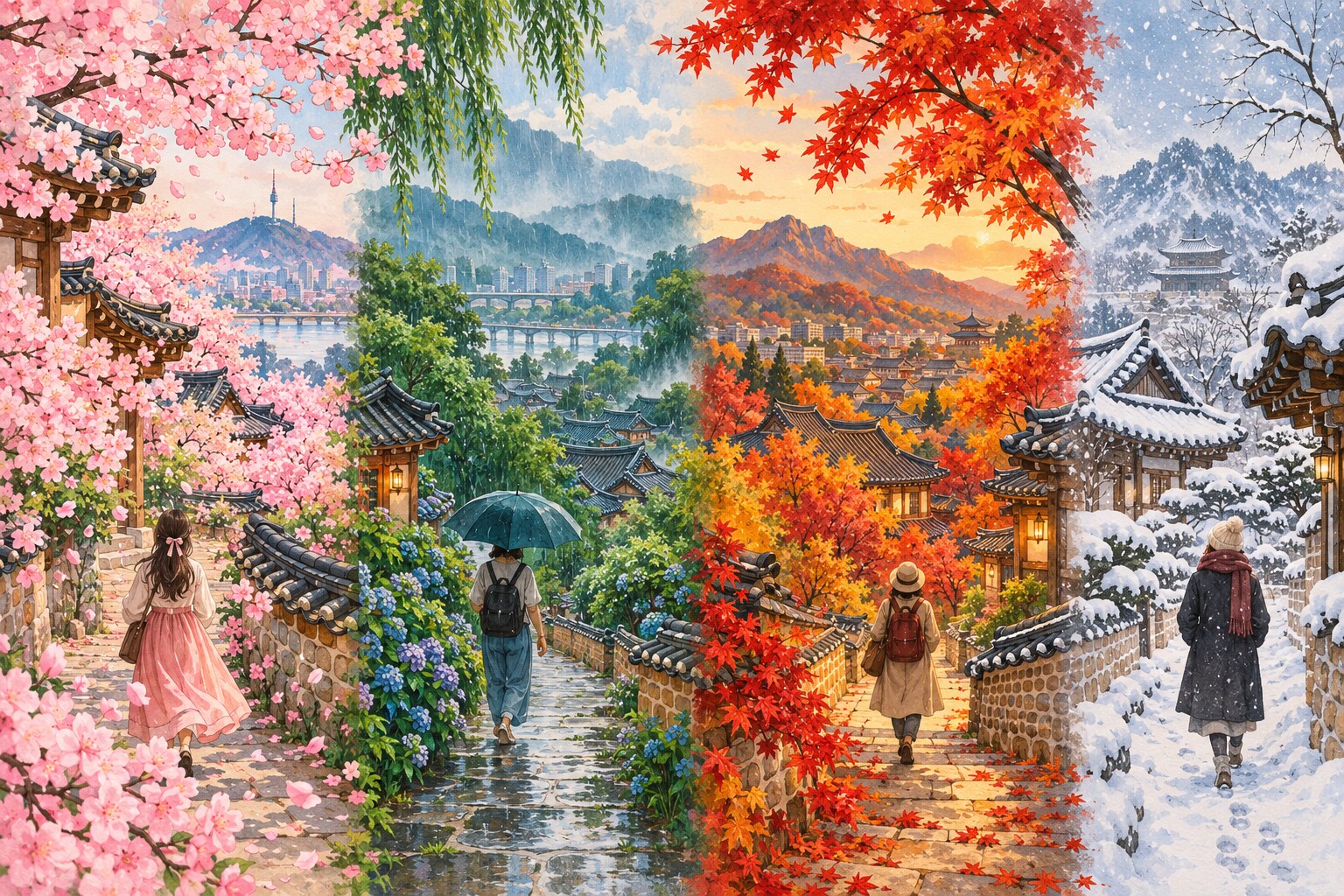
Featured image: original AI-generated illustration combining four seasonal scenes; not a photograph or a forecast.