Why does Korean food taste so good? Is it because of the seasoning, the fermentation, or simply because Koreans love food so much? The answer may actually lie in Korea’s geography, its four distinct seasons, and the long history of people learning how to survive with whatever nature provided.
A Country Blessed with an Amazing Variety of Ingredients
It is difficult to find another country with such a wide variety of ingredients packed into such a relatively small land. Korea is surrounded by the sea on three sides and has countless mountains, valleys, rivers, fields, and coastal areas.
From the mountains come wild greens, mushrooms, roots, herbs, and berries. From the fields come rice, barley, beans, vegetables, and fruit. From rivers and the sea come fish, shellfish, seaweed, and many other ingredients. This geography gave Koreans access to an enormous variety of foods.
That is one reason a traditional Korean meal can contain so many different dishes at once. A bowl of rice may be served with soup, kimchi, several kinds of vegetables, mushrooms, tofu, fish, meat, seaweed, pickled vegetables, and fermented sauces. The richness of Korean food begins with the richness of its ingredients.
Survival Created a Culture of Wild Greens
But the diversity of Korean food was not created by nature alone. For much of its history, the Korean Peninsula experienced wars, invasions, famine, heavy taxation, and strict social hierarchies. Life was often difficult for ordinary people.
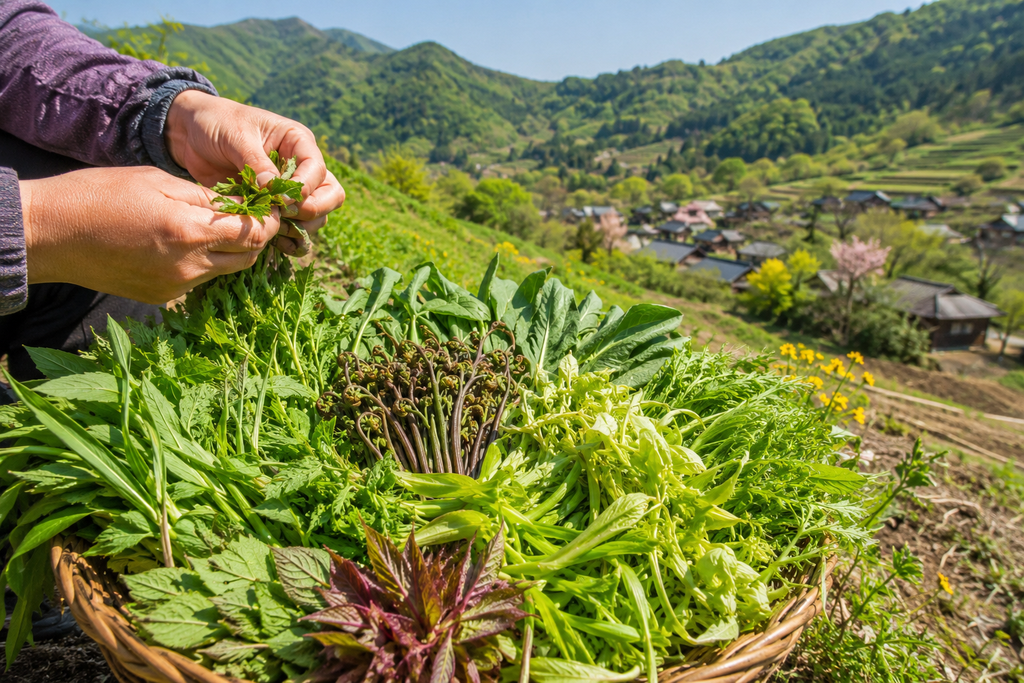
When food became scarce, people had to look beyond cultivated fields. They went into the mountains and searched for anything that could be eaten. Which leaves were edible? Which roots could be boiled? Which plants had to be soaked in water first? Could a bitter plant become edible after boiling? Could it be dried and stored for winter?
Over generations, people discovered ways to prepare an extraordinary variety of wild plants. Some plants that should not be eaten raw could be made safer through careful preparation such as boiling, soaking, drying, or fermenting. One well-known example is bracken fern, or gosari in Korean. Proper preparation is important, and Koreans have long used methods such as boiling, soaking, and drying before eating it.
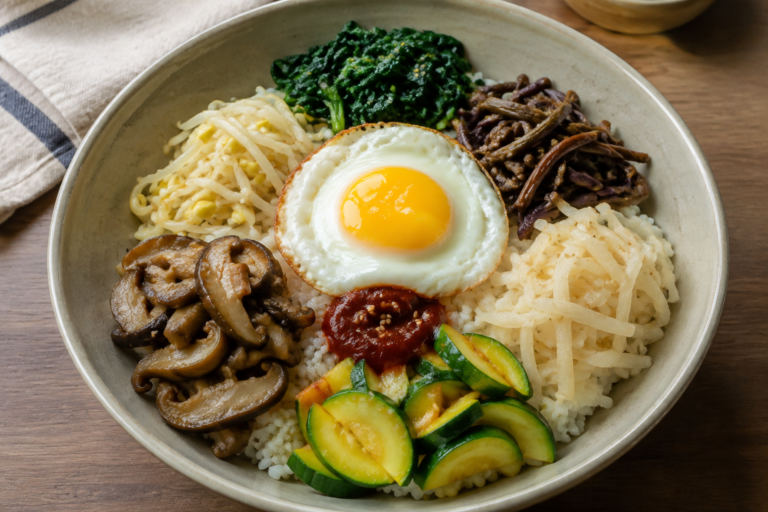
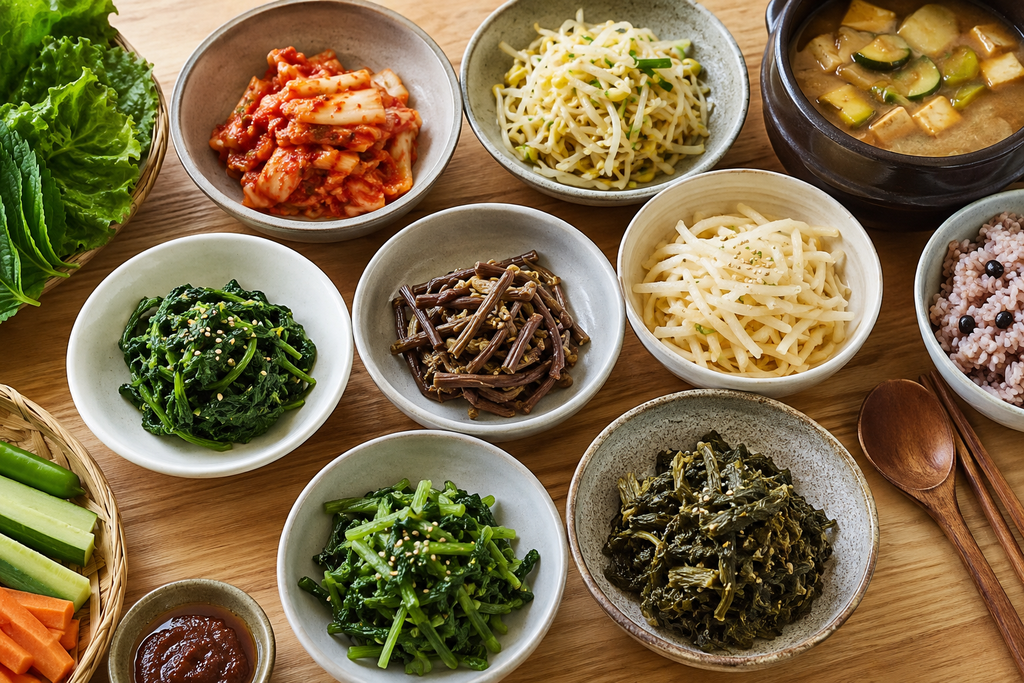
This accumulated knowledge of nature eventually became part of Korea’s rich namul culture. Namul refers broadly to seasoned vegetable dishes, often made with wild greens, leaves, stems, roots, mushrooms, and other plants. Gosari, doraji, chwinamul, gondre, naengi, dallae, ssumbagwi, dureup, sweet potato stems, and dried radish greens are just a few examples.
To many foreign visitors, some of these plants may look like ordinary grass or weeds. To Koreans, however, they can become delicious side dishes. The mountains were not simply wilderness. For many generations, they were also a vast natural pantry.
More Ingredients Mean More Flavors
Korean cuisine developed an impressive ability to turn the same basic ingredient into completely different dishes. A vegetable can be boiled and seasoned, stir-fried, dried and rehydrated months later, or seasoned with soy sauce, doenjang, sesame oil, perilla oil, garlic, or sesame seeds.
As a result, vegetable dishes do not all taste the same. One may be crunchy while another is soft. One may taste slightly bitter, while another may be nutty, savory, fresh, or deeply earthy.
This is one of the secrets of Korean food: Diverse ingredients create diverse flavors.
A Paradise for Vegetable Lovers
Of course, not all Korean food is vegetarian. Many types of kimchi contain salted seafood, and soups may use anchovy or meat broth. But anyone who enjoys vegetables will quickly discover that Korea has an extraordinary variety of plant-based dishes.
A Korean table can include rice, tofu, mushrooms, seaweed, beans, vegetables, roots, wild greens, fermented soybean paste, pickled vegetables, and many different kinds of namul. These dishes are not treated simply as substitutes for meat. They have their own identities, flavors, textures, and traditions.
Korean temple cuisine is one of the best examples. Traditional temple food emphasizes seasonal vegetables, mountain greens, mushrooms, tofu, grains, and fermented sauces while avoiding meat and fish. For people interested in vegetarian food, plant-based diets, or simply eating a greater variety of vegetables, Korean cuisine has a great deal to offer.
Vegetarian food in Korea does not have to mean eating the same salad every day. You can enjoy tofu, mushrooms, seaweed, beans, rice, wild greens, fermented foods, pickled vegetables, and dozens of different side dishes. A single meal can contain many flavors, textures, and nutrients. That is one reason Korean food is increasingly attractive to people who want to eat more plant-based foods.
Korea’s Harsh Winters Created Fermentation
Another major secret of Korean cuisine is fermentation. Korea has four very distinct seasons, and winters can be extremely cold. Today, supermarkets sell fresh vegetables throughout the year, but before refrigerators, greenhouses, and modern transportation, winter was very different.
People needed a way to preserve vegetables harvested in autumn so that they could eat them during the cold months. One of the most famous answers was kimchi. By salting and fermenting vegetables, people could preserve food much longer. This is also why kimjang, the tradition of preparing large quantities of kimchi before winter, became such an important part of Korean life.
And kimchi is not just one dish. There is baechu kimchi made with napa cabbage, kkakdugi made with radish, dongchimi made with radish in a refreshing brine, chonggak kimchi, yeolmu kimchi, green onion kimchi, cucumber kimchi, and many more. Different regions, seasons, and families developed their own varieties.
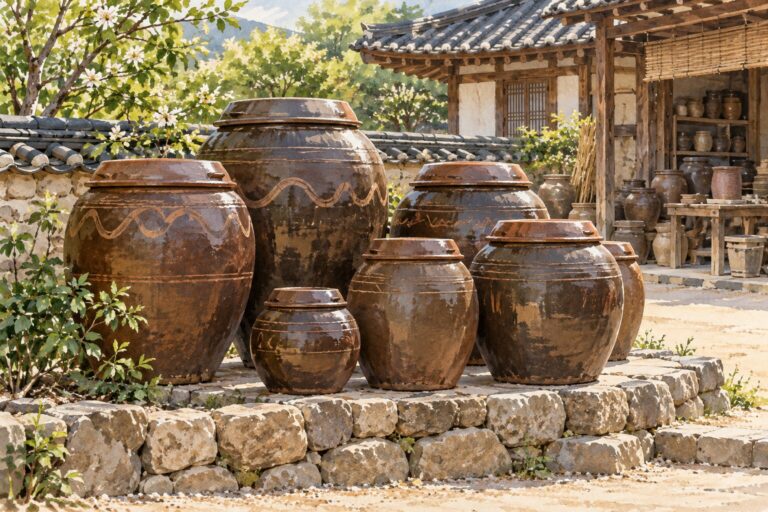
Soybeans were also transformed through fermentation. They became doenjang, or fermented soybean paste, and ganjang, or soy sauce. These fermented foods could be stored for long periods and developed deep, savory flavors over time.
What began as a practical method of preserving food eventually became one of the defining characteristics of Korean cuisine. Fermentation did more than help people survive the winter. It created flavor.
Eating the Four Seasons
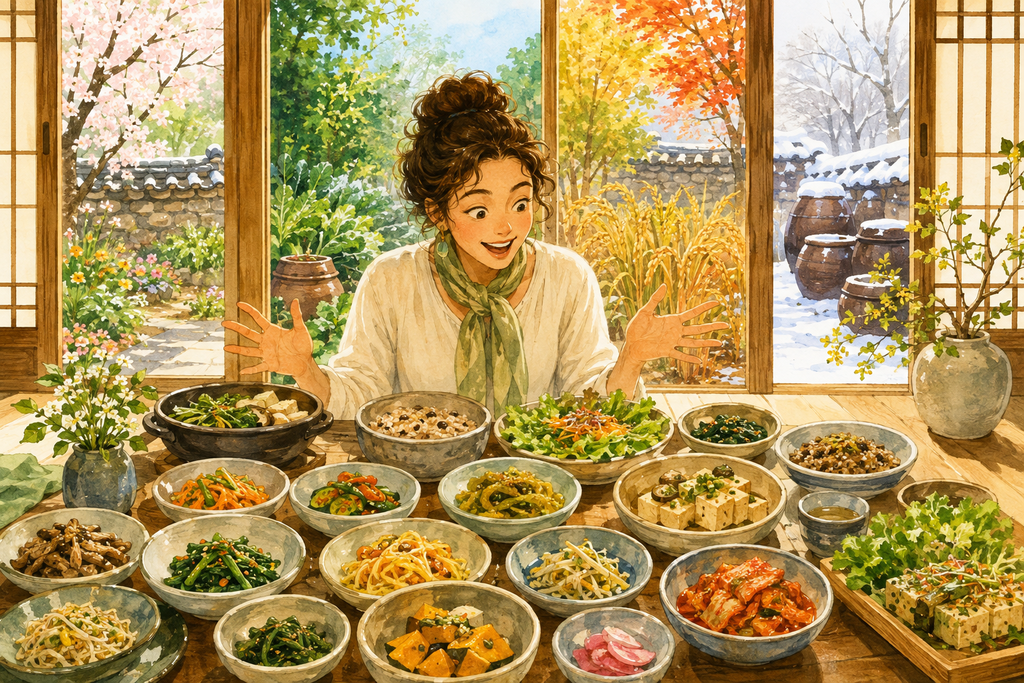
Korea’s four distinct seasons also shaped what people ate. Spring brings fresh wild greens such as naengi, dallae, and dureup. Summer brings cucumbers, eggplants, zucchini, melons, and many other vegetables and fruits. Autumn is the season of harvest, when grains, fruits, radishes, and cabbages become abundant. Winter becomes the season of preserved, dried, and fermented foods.
In this sense, Koreans have traditionally eaten the seasons. Spring tastes fresh and fragrant. Summer tastes bright and refreshing. Autumn tastes rich and abundant. Winter tastes deep, fermented, and comforting.
Even the same ingredient may be eaten differently depending on the season. For generations, Korean cooking developed around this rhythm of nature.
If You Want to Experience Real Korean Food, Try Hanjeongsik
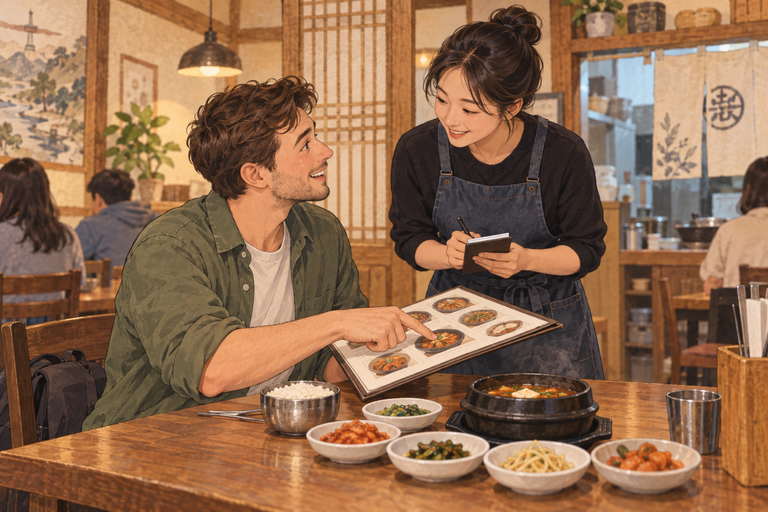
If you visit Korea and eat only bulgogi, samgyeopsal, fried chicken, and Korean barbecue, you may leave without experiencing one of the most fascinating sides of Korean cuisine. At least once, try hanjeongsik, a traditional Korean set meal.
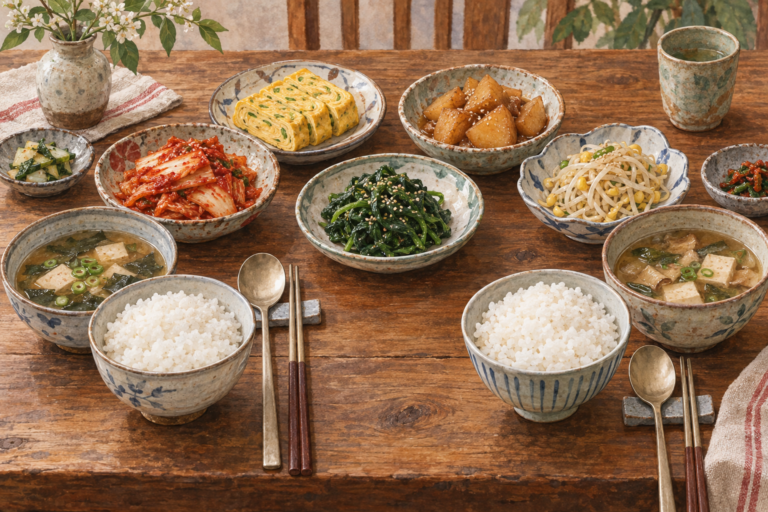
First comes rice. Then soup and kimchi. Soon, small dishes begin to fill the table: vegetables, mushrooms, tofu, fish, jeon, pickled vegetables, seasoned roots, wild greens, fermented sauces, and sometimes meat or seafood.
Then even more dishes arrive.
A first-time visitor may look at the table and wonder, “Wait… is my main dish still coming?”
No. This is the meal.
And that is part of the beauty of Korean dining. Instead of one large dish dominating the table, many small dishes are eaten together. You can combine rice with one vegetable, then try it with kimchi, mushrooms, doenjang, or another kind of namul. The flavor changes with every bite.
On one Korean table, you can find ingredients from the mountains, fields, rivers, and sea. You can also find traces of spring, summer, autumn, and winter. There is the wisdom of people who searched the mountains for food during difficult times, the ingenuity of people who learned to preserve autumn vegetables through the freezing winter, and the patience required to ferment soybeans and vegetables over time.
That is why Korean cuisine is much more than spicy food. Its true secret is diversity—a diversity of ingredients, cooking methods, seasons, textures, and flavors.
So when you visit Korea, do not look only for meat. Try a small plate of namul. Taste a spoonful of doenjang soup. Try several different kinds of kimchi. And if you have the chance, sit down in front of a full hanjeongsik table.
You may discover that one of the greatest pleasures of Korean food is hidden in the smallest dishes.
Korean food is not delicious because of one secret ingredient. It is delicious because generations of people learned how to make the most of almost everything nature gave them.