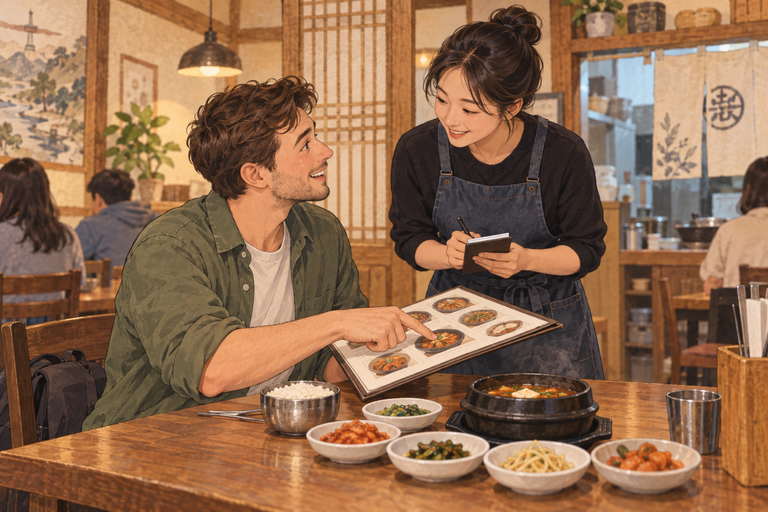
It Begins with Namul
To many people outside Korea, bibimbap is a colorful bowl of rice topped with vegetables, meat, an egg, and red gochujang. But to understand bibimbap, you must first understand namul, one of the most fundamental foods on the Korean table.
What Is Namul?
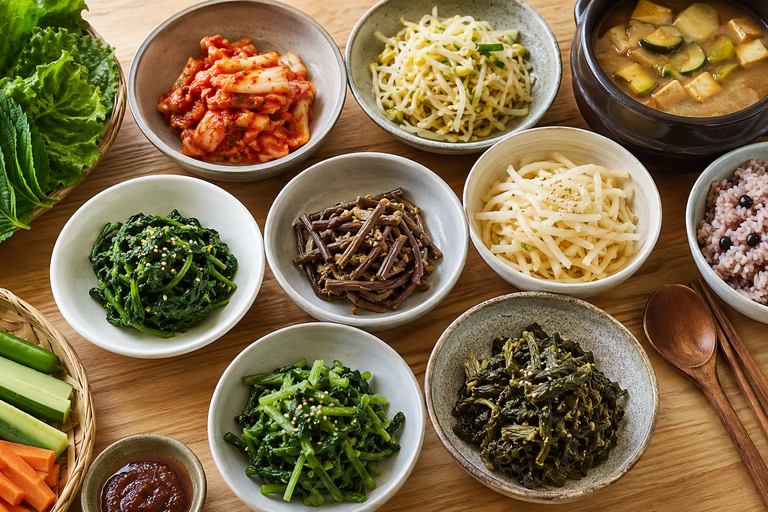
Namul is often translated as “seasoned vegetables,” but the word has a broader meaning. It can refer both to edible plants—leaves, stems, roots, sprouts, mushrooms, and wild greens—and to dishes prepared from them.
Spinach, soybean sprouts, fernbrake, bellflower root, zucchini, and radish greens can all become namul. Some are served raw, while others are blanched, boiled, or lightly stir-fried. They are usually seasoned with salt or soy sauce, garlic, green onion, sesame oil, and sesame seeds.
The purpose of namul is not to hide the natural flavor of the vegetable. Good namul preserves each ingredient’s own taste, texture, and seasonal character. Because every vegetable requires a different cooking method, preparing several kinds of namul takes more time and care than their simple appearance suggests.
Bibimbap, therefore, is not merely rice topped with raw vegetables. It brings together several individually prepared dishes in one bowl.

A Dish Born from Everyday Life
One popular explanation for the origin of bibimbap comes from everyday Korean home cooking.
After a meal, a family might have small portions of several namul dishes left over—not enough to serve again separately, but too valuable to waste. These could be placed over warm rice and mixed with gochujang or soy sauce and a little sesame oil. Separate side dishes would then become a satisfying new meal.
The name describes this simple action. Bibim means “mixing,” and bap means cooked rice. Bibimbap literally means “mixed rice.”
There is no single proven story about exactly when or where bibimbap began. Some theories connect it to leftover food from ancestral rites, while others associate it with farm meals, royal cuisine, or the custom of finishing remaining side dishes before the New Year. It is probably best understood not as a dish invented at one particular moment, but as a natural result of Korea’s long tradition of eating rice with many small side dishes.
The Lunchbox Bibimbap of the 1970s and 1980s
The sharing spirit of bibimbap can also be seen in memories of Korean school life during the 1970s and 1980s, before school lunches became widely available.
Many students brought lunchboxes from home, and every family packed different side dishes. One student might have kimchi or soybean sprouts, while another brought stir-fried anchovies, black beans, or a fried egg.
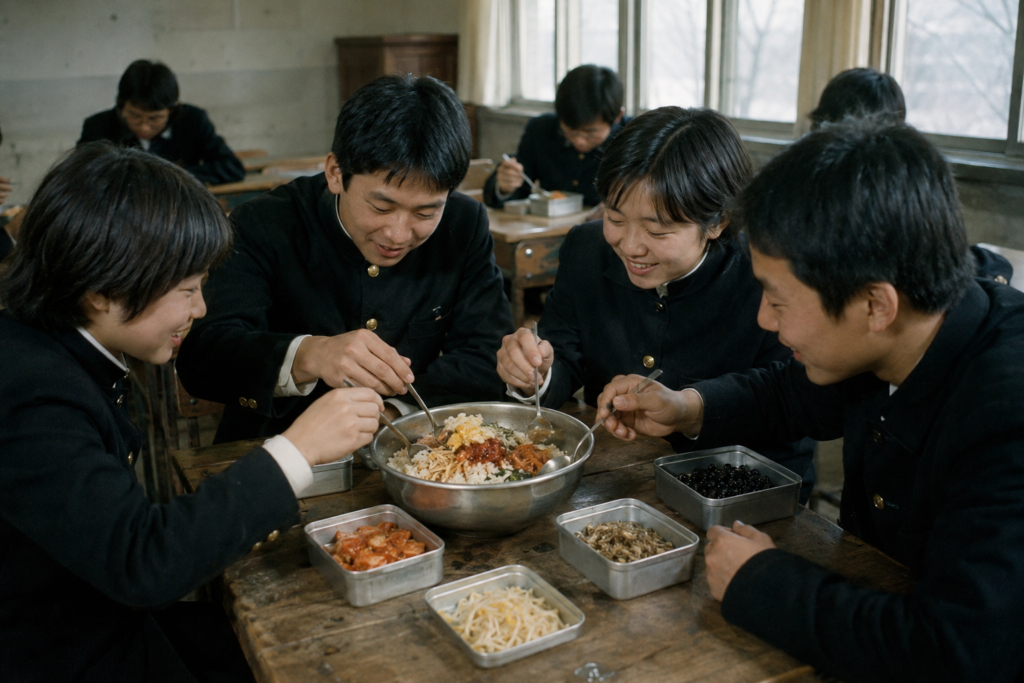
Many Koreans remember gathering with friends and emptying their rice and side dishes into a large metal bowl called a yangpun. Someone would add gochujang and sesame oil, and everyone would mix and share the result.
An ordinary lunchbox became much more varied when combined with food from other homes. Once everything was mixed, it no longer mattered which family had brought which side dish. The meal belonged to everyone.
More Than Leftovers
Describing bibimbap simply as “leftover food” misses its deeper meaning. Bibimbap shows that food does not lose its value because only a little remains. Small portions can be gathered, balanced, and transformed into something complete.
It is also a dish about sharing. Different ingredients keep their own flavors and textures, yet they come together in harmony. In the same way, food brought by different people can become one communal meal.
Before looking at the red sauce, the fried egg, or the beautiful arrangement, look first at the namul—the careful preparation of ordinary vegetables, the wisdom of wasting nothing, and the pleasure of sharing what one has.
That is the truth about bibimbap.