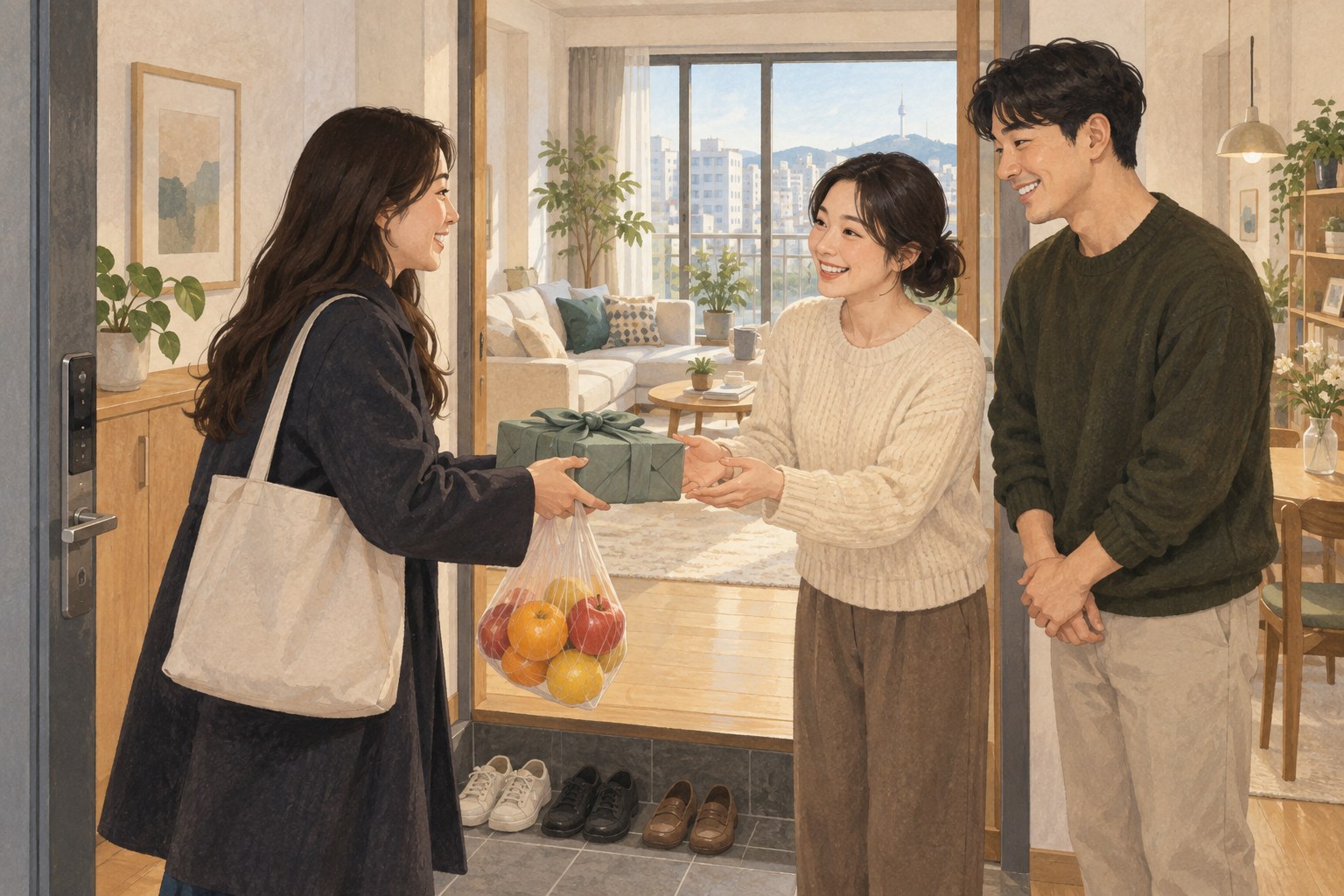
You have been invited to a friend’s new home, and another guest suggests bringing toilet paper. If you are new to Korean housewarming culture, that may sound surprising. Toilet paper and detergent are familiar gifts because they are useful and can carry good wishes. But understanding a housewarming begins with the invitation itself: someone is welcoming you into the place where a new chapter of everyday life is beginning.
Why toilet paper and detergent can be thoughtful gifts
Toilet paper is often explained as a wish for life to unfold smoothly, while detergent’s bubbles are associated with growing prosperity. These are symbolic interpretations attached to everyday gifts, not promises of good fortune or beliefs shared by every Korean person. Practicality matters too: household supplies are useful after a move. Still, fragrance, ingredients, and product preferences differ. Asking what the host actually needs can be more thoughtful than choosing something only because it appears on a cultural checklist.
Choose for the person’s home and habits
A large decorative object may be inconvenient in a small apartment. A plant needs suitable light and someone willing to care for it. Food gifts call for attention to allergies and dietary preferences. Fruit or a simple dessert can work, but check whether the host has already prepared plenty of food. You might ask what would be useful or offer a few choices. Do not assume everyone drinks alcohol. The best gift is often something easy to enjoy or use, rather than the most expensive item you can find.
Confirm the time and the guest list
Arrive around the agreed time. Coming much too early can interrupt preparations; if you will be late, let the host know. Ask before bringing an extra guest, even if you are close friends. An unexpected person changes the amount of food and space needed. Check before bringing children or a pet as well. These conversations do not need to be formal. They simply make it easier for everyone to feel welcome.
From the entrance to the table
Shoes are usually removed at the entrance of a Korean home. Follow the host’s lead about indoor slippers. An invitation to look around does not mean you should open closed rooms, cupboards, or drawers. Offer to help with food preparation, but respect the answer: some people prefer guests to relax while they work in the kitchen. The meal may be homemade Korean food, delivery, or a few snacks. A large home-cooked spread is not a requirement for a proper housewarming.
Ask before photographing a private home
A beautiful room or view can be tempting to photograph. Family pictures, mail, and the view outside a window may reveal private information or location details. Ask separately about taking a photograph and posting it online. Questions about the home’s price, borrowing, or rental arrangements can also feel intrusive unless the host raises them. A comment such as ‘The light is lovely here’ can appreciate the space without asking the owner to discuss finances.
A good guest helps keep the occasion comfortable
Before leaving, ask what to do with used dishes and rubbish. Offering help is considerate; insisting on reorganizing the kitchen is less so. A short thank-you message afterward is a warm finishing touch. Korean housewarming culture does not depend on finding one correct object to buy. Its hospitality works best when guests celebrate the new home while respecting the people, space, and time that make it welcoming.
Further reading: Korea.net: A newcomer’s experience of life in Korea
Related reading: Jjimjilbang Culture: A First-Time Visitor’s Guide to Korea’s Shared Retreats