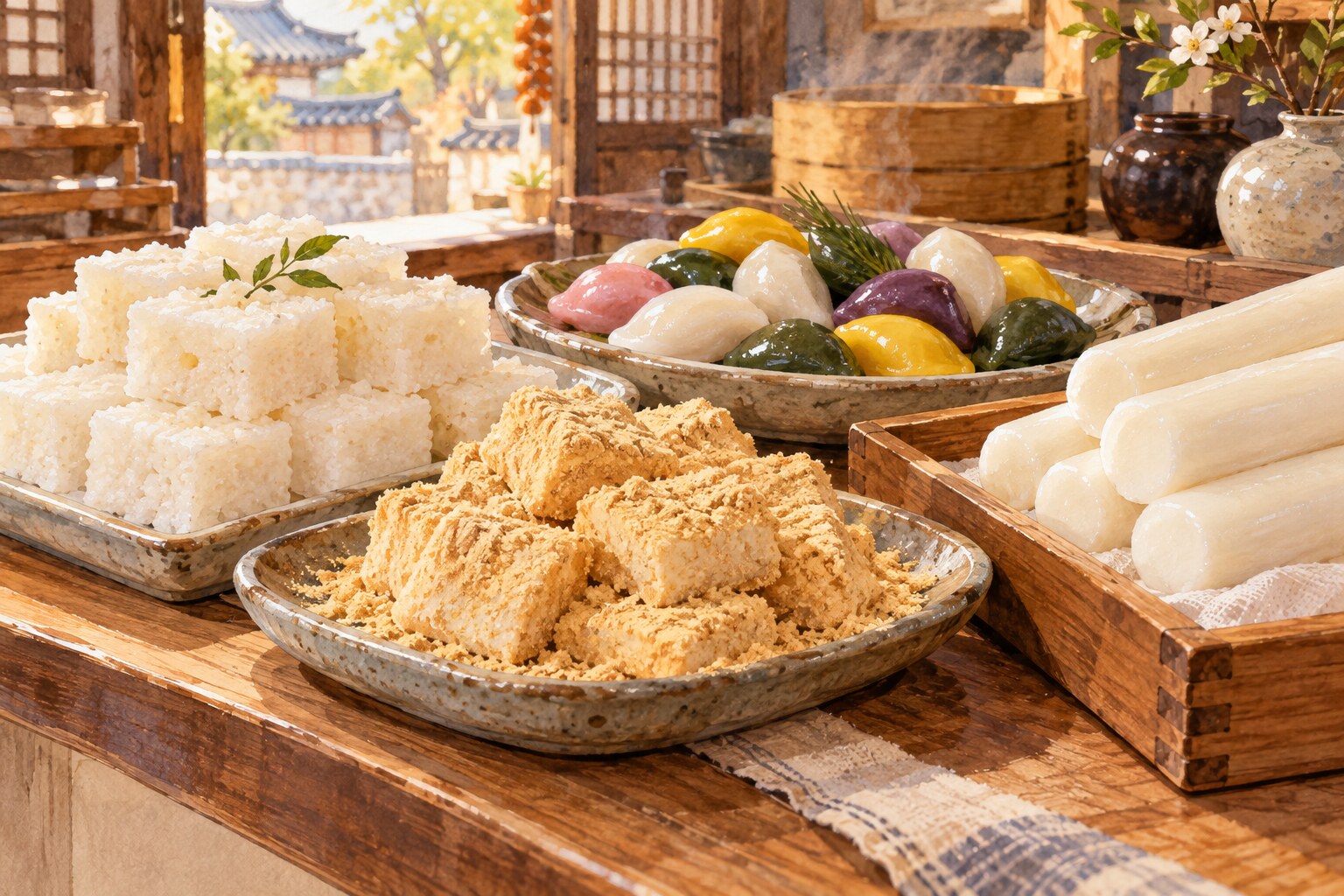
Korean rice cakes, called tteok (떡), include far more than the chewy cylinders in a spicy tteokbokki sauce. A rice-cake shop may display powder-coated pieces, pale steamed blocks, filled crescents and long white cylinders. They belong to the same broad food family, but they are not interchangeable snacks.
For a first purchase, choose by texture and purpose: something soft and crumbly, something dense and chewy, something filled, or something intended for cooking. That approach is more useful than picking only the brightest color.
Four names to recognize at the counter
| Name | What to look for | What to ask |
|---|---|---|
| Baekseolgi (백설기) | White steamed rice cake, often cut into blocks | Is this plain, or does it contain added ingredients? |
| Injeolmi (인절미) | Chewy pieces, often coated in beige soybean powder | What is the coating made from? |
| Songpyeon (송편) | Small filled rice cakes, often shaped like crescents | What filling is inside this batch? |
| Garaetteok (가래떡) | Long white cylindrical rice cake | Is this ready to eat, or intended for cooking? |
Baekseolgi: start with a mild steamed rice cake
Baekseolgi offers a different texture from stretchy rice cakes. Its steamed rice-flour structure can feel soft and gently crumbly. The Korea Tourism Organization describes the plain version as a white steamed cake with a light, sweet flavor.
If your idea of “cake” involves frosting and butter, reset that expectation. The appeal here is the rice texture and mild sweetness. Ask whether the version in front of you has additions, because a display name or white exterior does not reveal every ingredient.
Injeolmi: chewy, powdery and easy to recognize
Injeolmi is commonly associated with a coating of soybean powder and a dense, chewy texture. The coating can vary; black sesame versions are another example. A beige powder coating is a useful clue, but the seller can tell you exactly what was used.
Choose a small pack first if you have not tried this texture before. The powder can fall away as you lift a piece, so open the package on a stable surface rather than while walking. You may recognize the name from injeolmi-flavored desserts, but the rice cake itself is a good starting point for understanding the texture.
Songpyeon: look beyond the color to the filling
Songpyeon is strongly associated with Chuseok. These filled rice cakes can contain ingredients such as sesame, beans or chestnuts. Different colors make an attractive display, but color is not a dependable guide to the filling.
If you are sharing a mixed pack, ask the seller how to distinguish the varieties. Buying two fillings to compare can make a more interesting introduction than buying a large box of one unknown kind. The filling affects the flavor as much as the rice-cake exterior does.
Garaetteok: check whether you are buying a snack or an ingredient
Garaetteok is the long white cylindrical rice cake associated with sliced rice-cake soup and other preparations. The form and condition in which it is sold matter. A freshly prepared piece and a packaged product intended for cooking may require different handling.
If you want something to eat immediately, say so. Ask the seller to point you toward ready-to-eat choices rather than assuming every item in the shop can be enjoyed straight from its package. If you are buying for a recipe, explain the dish you intend to make.
A simple first order at a tteokjip
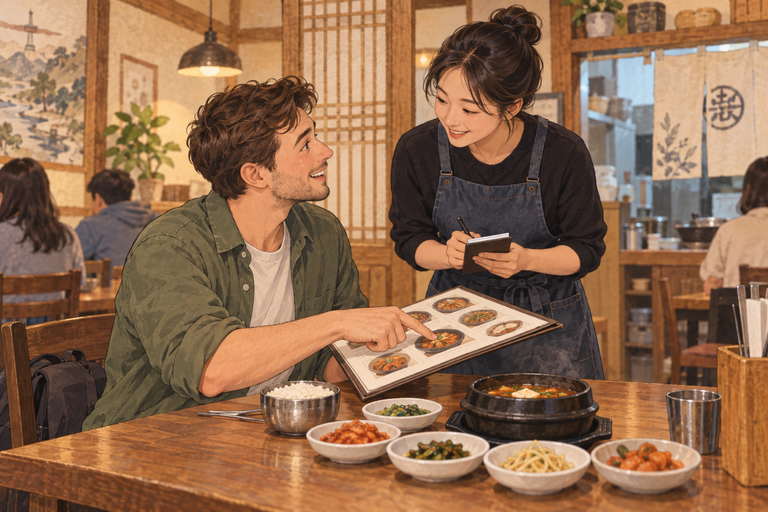
A rice-cake shop is called a tteokjip (떡집). Try pointing to a small pack and saying 이거 하나 주세요 — “One of these, please.” For a filled variety, 안에 뭐가 들어 있어요? means “What is inside?”
For a useful comparison, choose one steamed variety and one chewy or filled variety. Ask how the seller recommends storing them and when they are best eaten. Follow the package instructions; do not assume that every type keeps or reheats in the same way.
If ingredient restrictions matter to you, check the actual product. A rice-based name does not establish that every coating, filling or added ingredient suits your needs.
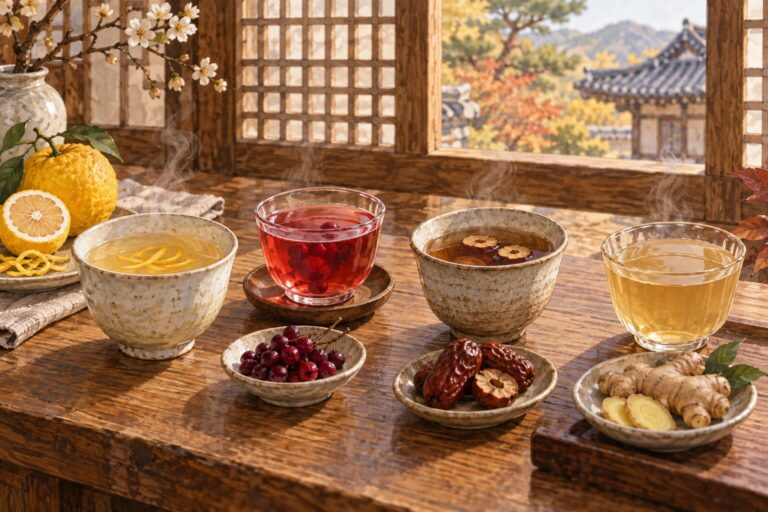
Enjoy your small selection with a drink you already like, or explore our guide to Korean traditional tea. If you are shopping in a market, the traditional-market shopping guide covers navigating stalls and making a clear order.
Sources: Korea Tourism Organization on injeolmi and baekseolgi; Ministry of Culture, Sports and Tourism on songpyeon. Recipes and fillings vary by producer.