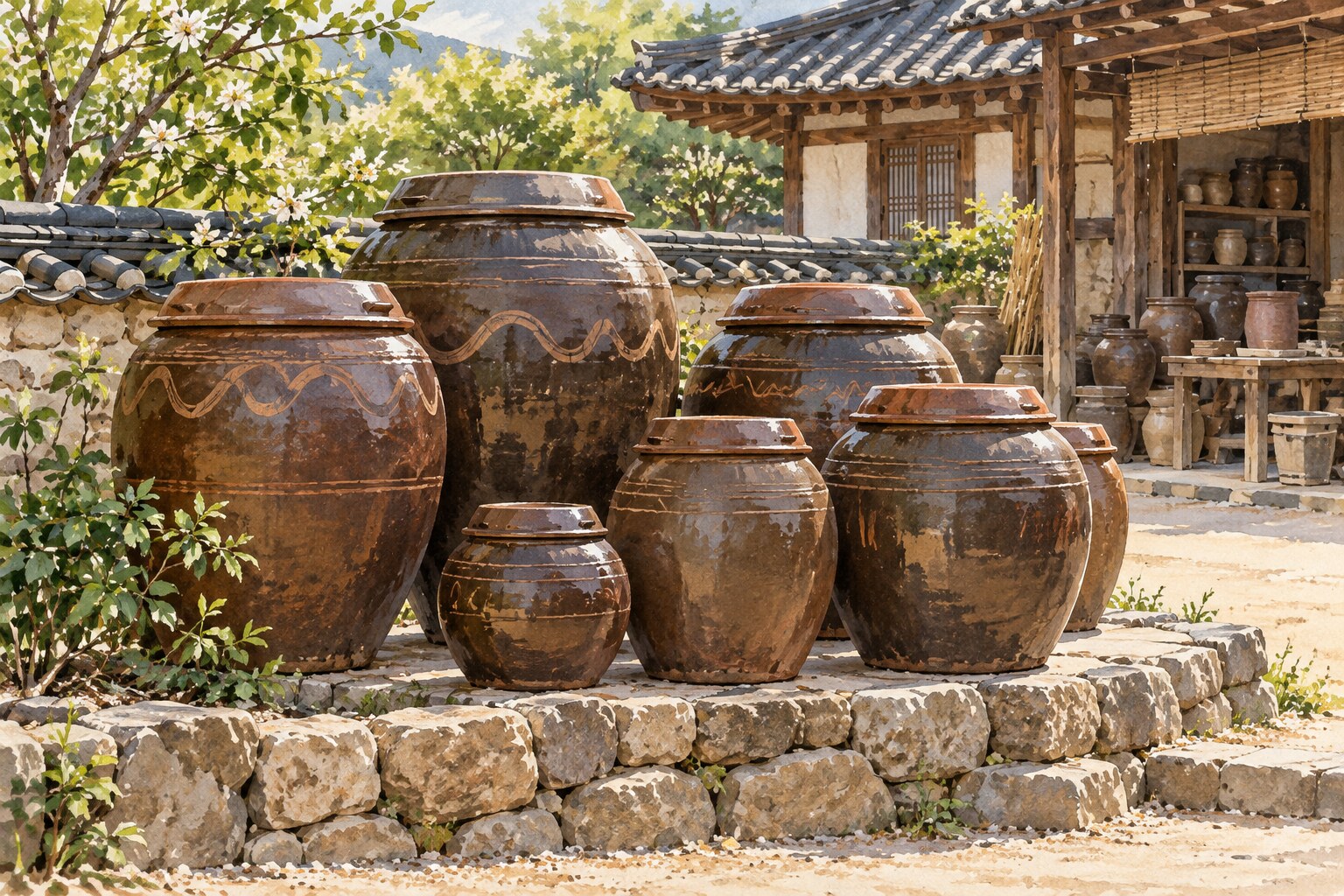
A row of brown jars beside a Korean house can look like a decorative arrangement. Yet Korean onggi jars belong to the history of everyday food preparation and storage. Their importance is easier to understand when you stop looking for a precious ornament and start asking what the vessel was expected to do.
The jar and the place where it stands
Onggi (옹기) refers to traditional Korean earthenware. The rounded, lidded storage jar is a familiar form, but the term is broader than one size or silhouette. The place where household jars are gathered is called a jangdokdae (장독대).
Korea.net’s heritage series describes onggi as a practical household tradition and connects the jars with the preparation and storage of fermented seasonings. Soy sauce, soybean paste and red pepper paste are part of that story. A container standing quietly outside could be involved in the flavors used repeatedly at the family table.
What does “breathing pottery” mean?
The phrase is a vivid way of talking about a material property, not a claim that a jar is alive. In a 2023 study, researchers examined how carbon dioxide could pass through an onggi vessel and how this affected kimchi fermentation. Their work gives a physical explanation for part of the pottery’s reputation.
It does not mean every brown ceramic pot performs identically. The material, manufacture and surface treatment matter. Nor does the phrase tell you whether an unfamiliar decorative object is suitable for storing food. If you plan to use a newly purchased vessel, ask the maker about its intended use and care.
Look at the object as a tool
When you see a group of jars, compare the height, shoulder, opening and lid. Imagine the practical questions each shape raises. How would you reach inside? Where could you grip it? How much room would it take to move or clean? These questions make a display more interesting even before you know the name of every type.
Notice the surface too. Differences in color or decoration give you something specific to ask about. Rather than assuming a mark proves great age or hand production, ask: “How was this finish made?” A good conversation with a maker can be more informative than a general claim that an object looks traditional.
A place to begin learning
Oegosan Onggi Village in Ulju-gun, Ulsan, is listed by the Korea Tourism Organization as a destination associated with earthenware production and the Ulsan Onggi Museum. It offers a concrete place to explore the craft beyond a photograph of a courtyard.
Before planning around a workshop, confirm the current program, language support and booking arrangements. A museum visit and a hands-on class are different activities. If you hope to take home something you make, ask whether drying and firing require later collection or delivery.
A thoughtful small souvenir
If you want to buy a piece, first decide whether you want a decorative object or a working kitchen container. Then ask about size, weight, lid fit, care and protective packaging. A small vessel you can use and explain may be more satisfying than a large jar you cannot transport comfortably.
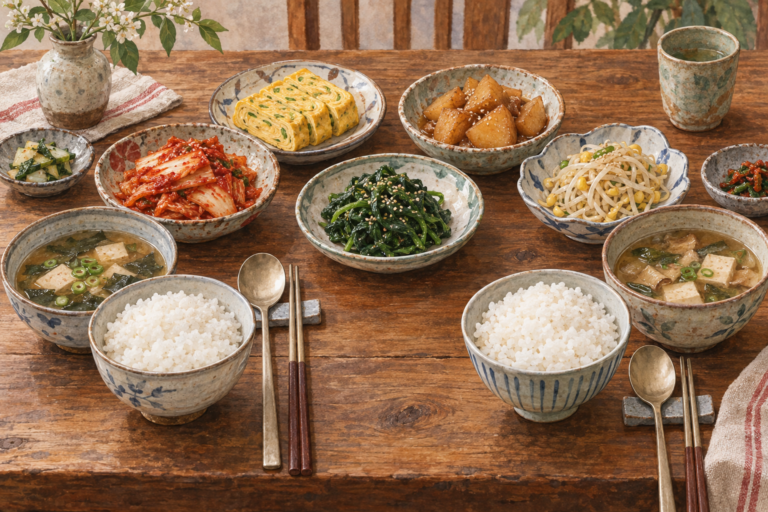
You can also take the idea home without buying anything. At your next Korean meal, notice the seasonings behind the finished dish. Our guide to kimjang and sharing explores the social work of preparing food; onggi adds the material side of that wider story.
Sources: Korea.net: Onggi heritage series, part 1 and part 2; Kim and Hu, 2023: Onggi’s permeability to carbon dioxide; VISITKOREA: Oegosan Onggi Village. Featured image: original AI-generated illustration.